The Exclusive Buddhist Iconography Of Ratnagiri & Lalitagiri Rarely Found

The Exclusive Buddhist Iconography Of Ratnagiri & Lalitagiri Rarely Found Elsewhere
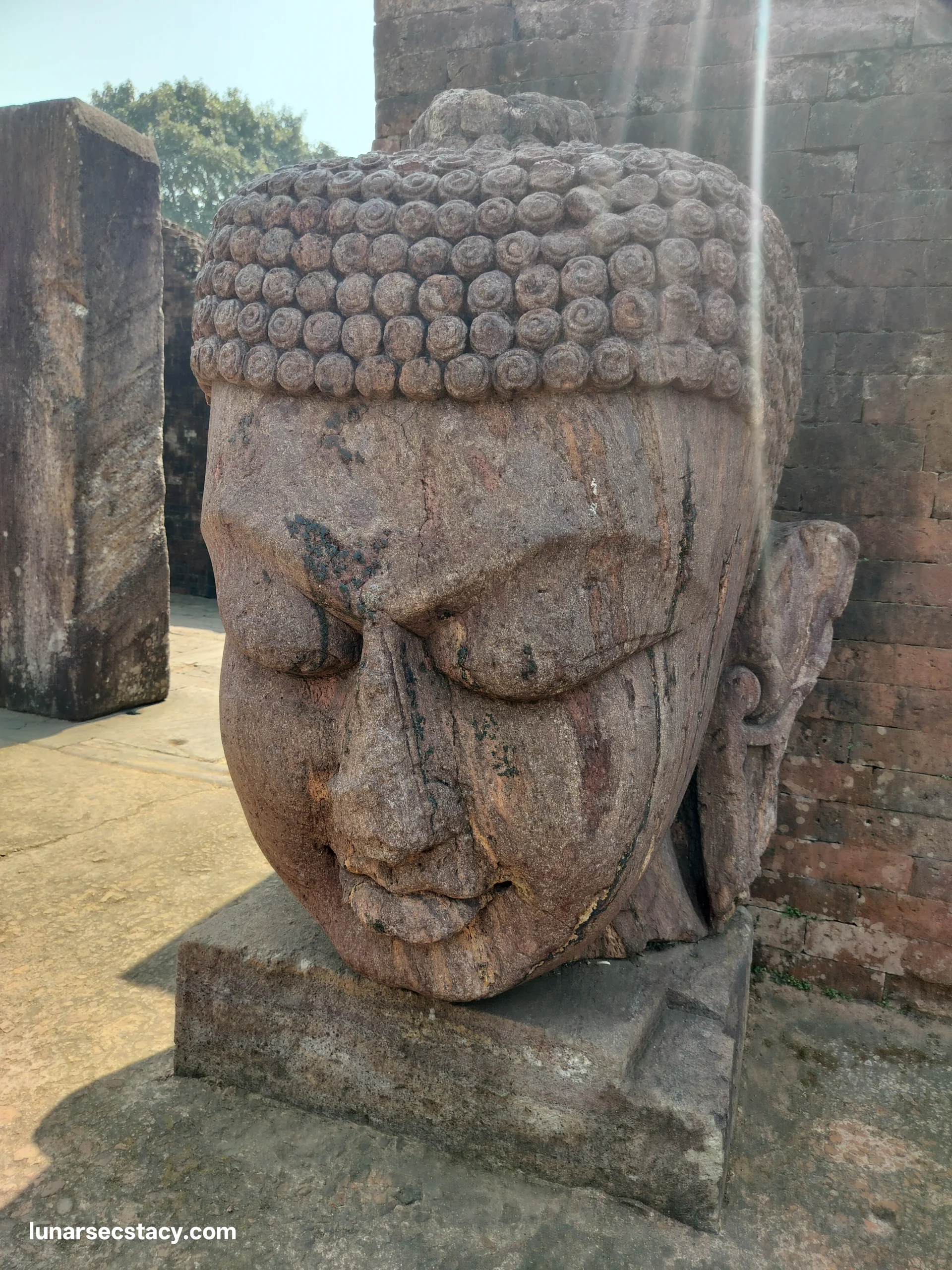
Ratnagiri & Lalitagiri, part of Odisha’s “Diamond Triangle,” feature rich 5th–13th century Mahayana and Vajrayana Buddhist iconography, including massive Buddha heads with striking resemblance to their counterparts in Borobudur in Java and Anuradhapur in Srilanka. The museum at Lalitagiri houses the sacred relic caskets, most possibly containing the bone relics of Lord Buddha. Key icons include the Buddha in Bhumisparsha mudra and Dhyana mudra. There are many artifacts displayed in the on-site Archaeological Survey of India (ASI) museums in Ratnagiri and Lalitagiri.
Buddhist Iconography (5th-13th Century AD) Available At Ratnagiri
- Buddha Images: Numerous colossal Buddha heads, a 12-foot main Buddha statue in Bhumisparsha mudra (earth-touching).
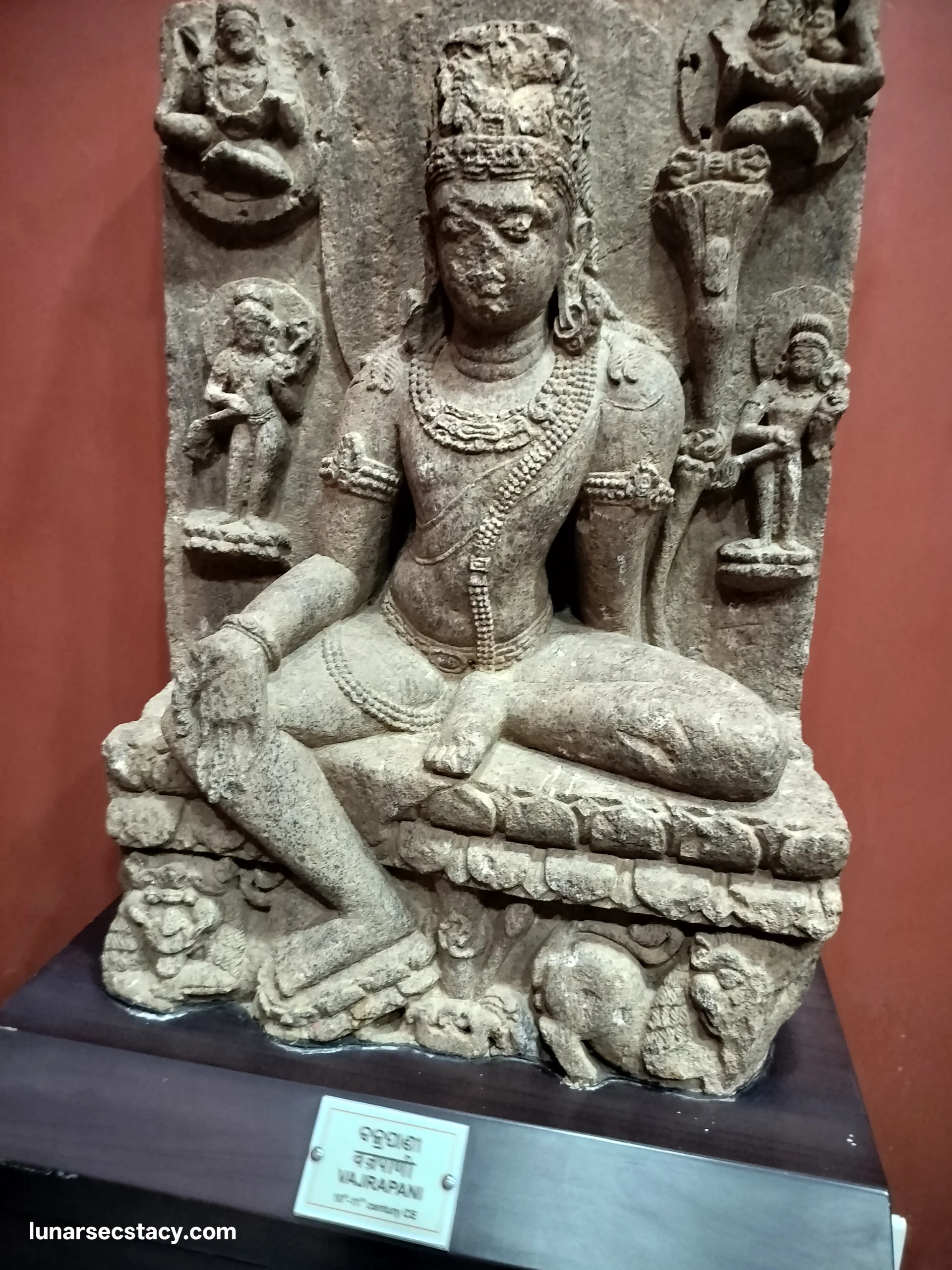
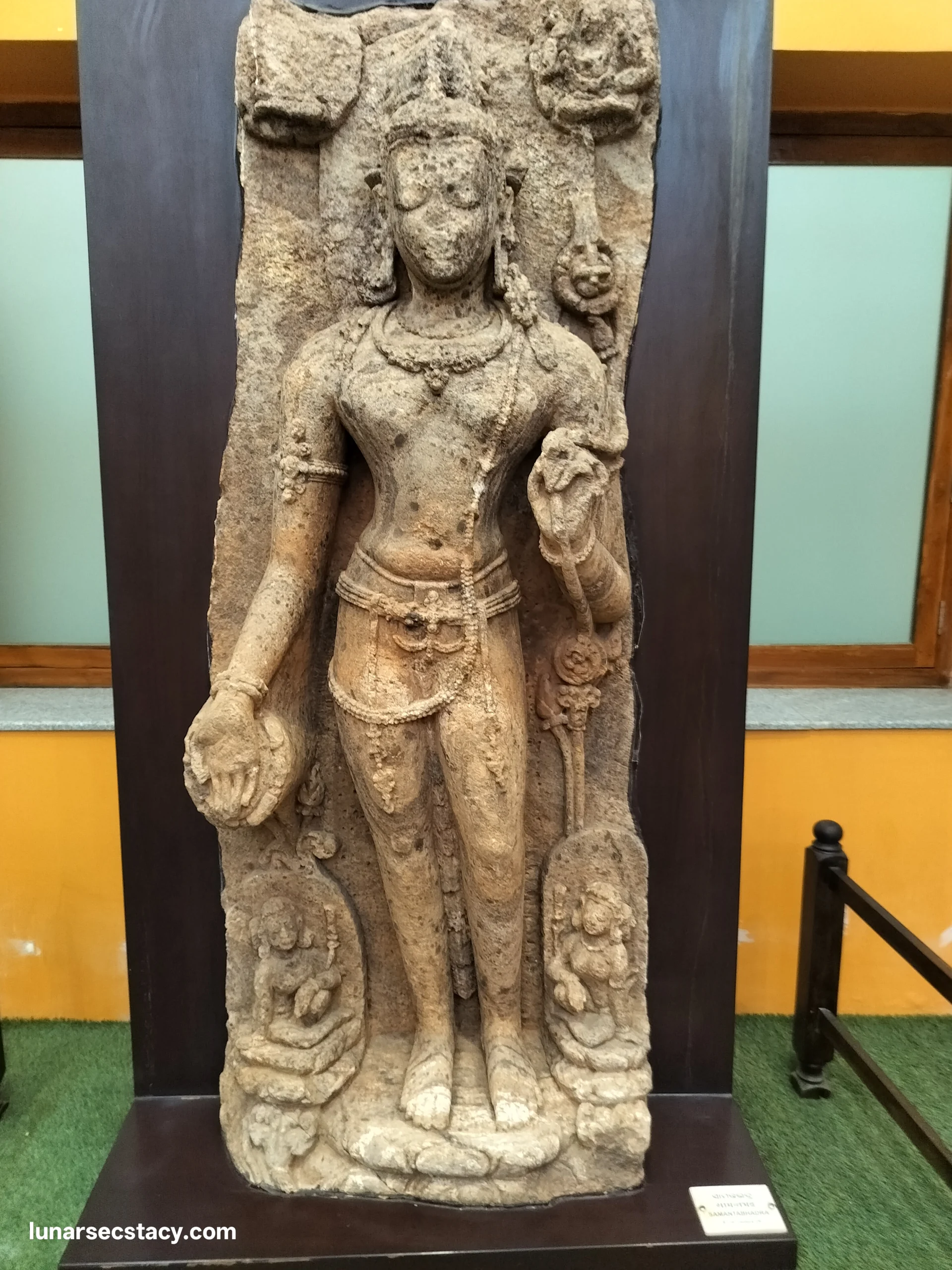
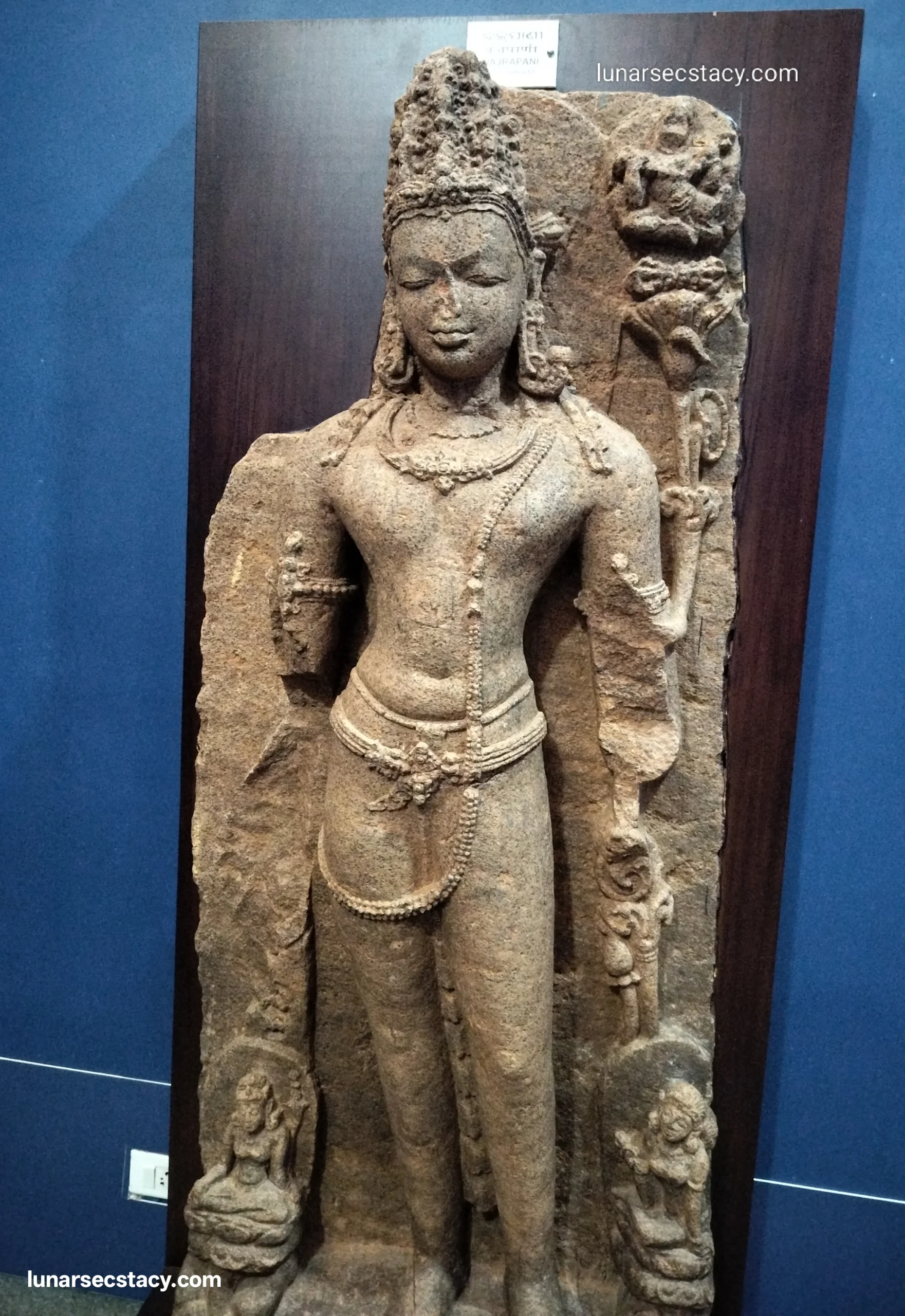
- Bodhisattvas: Intricate carvings of Padmapani and Vajrapani.
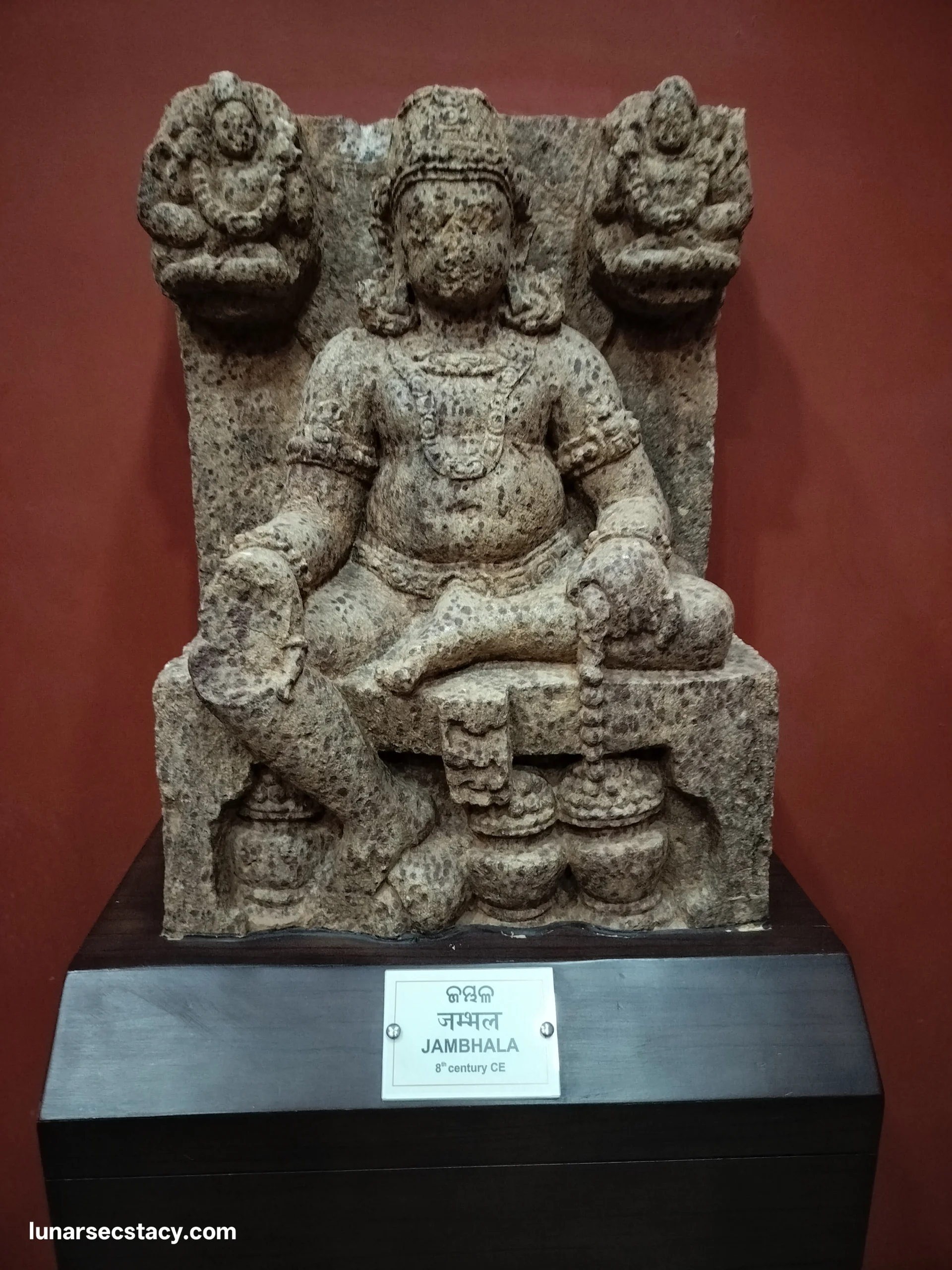
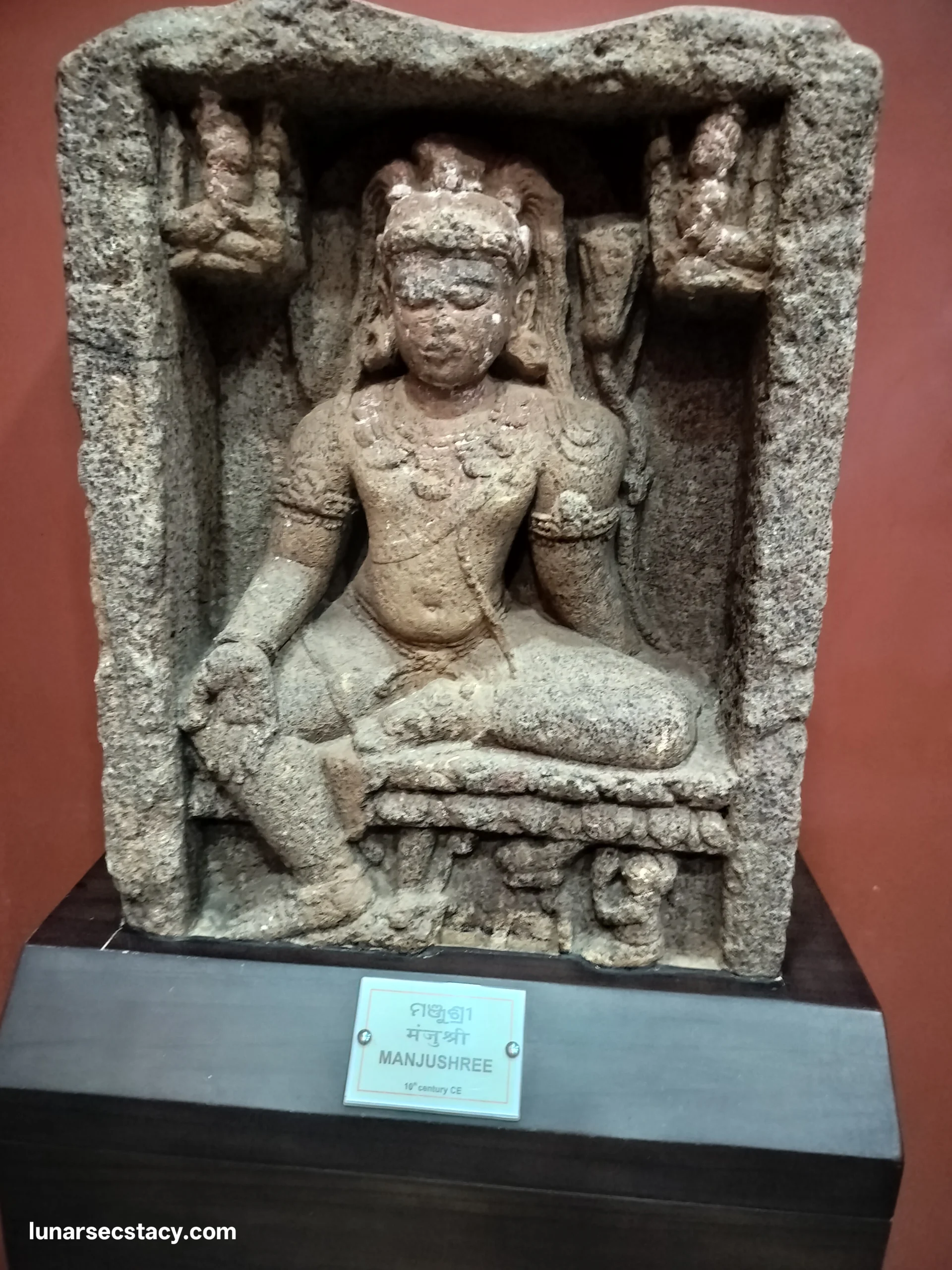
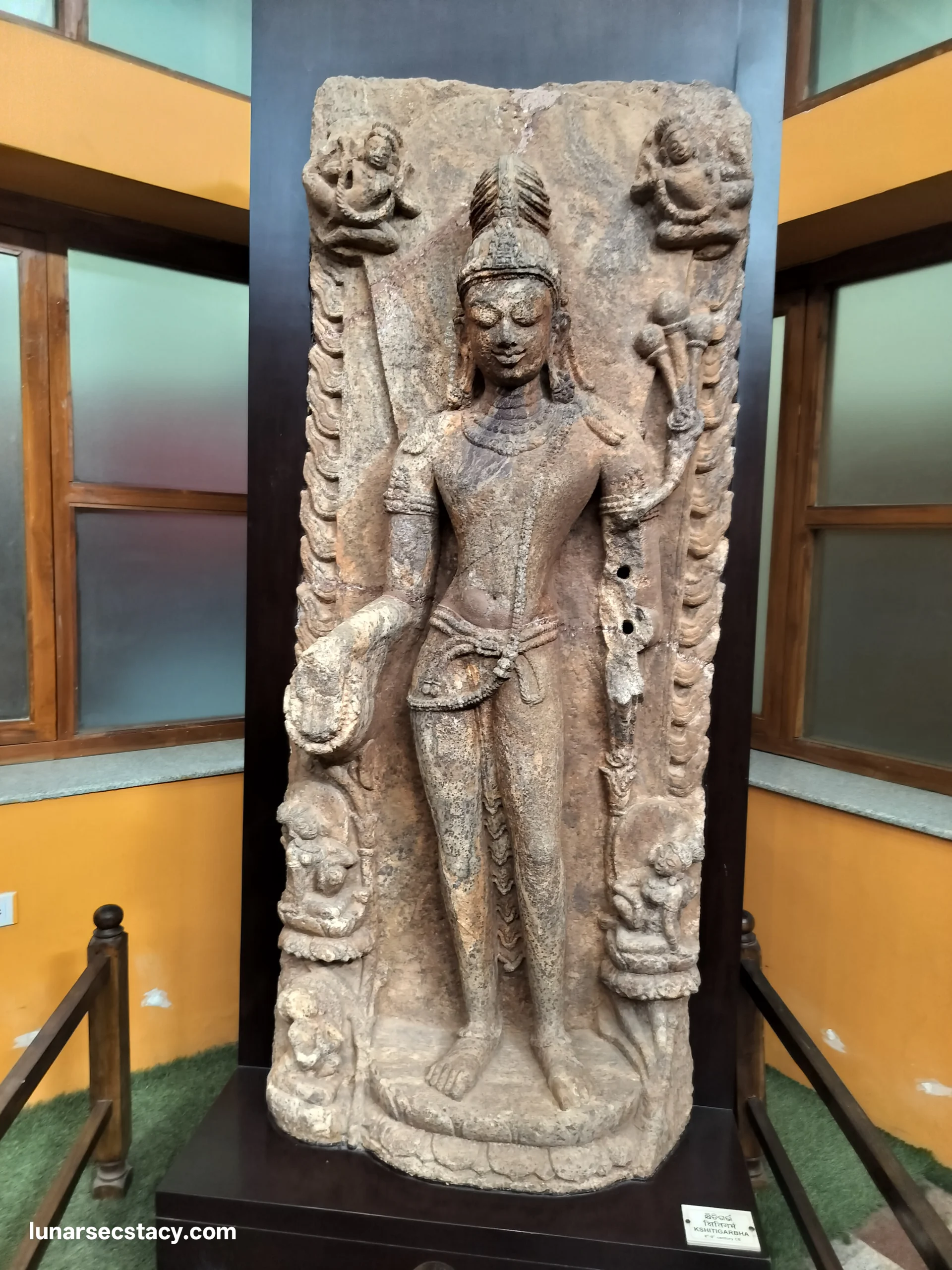
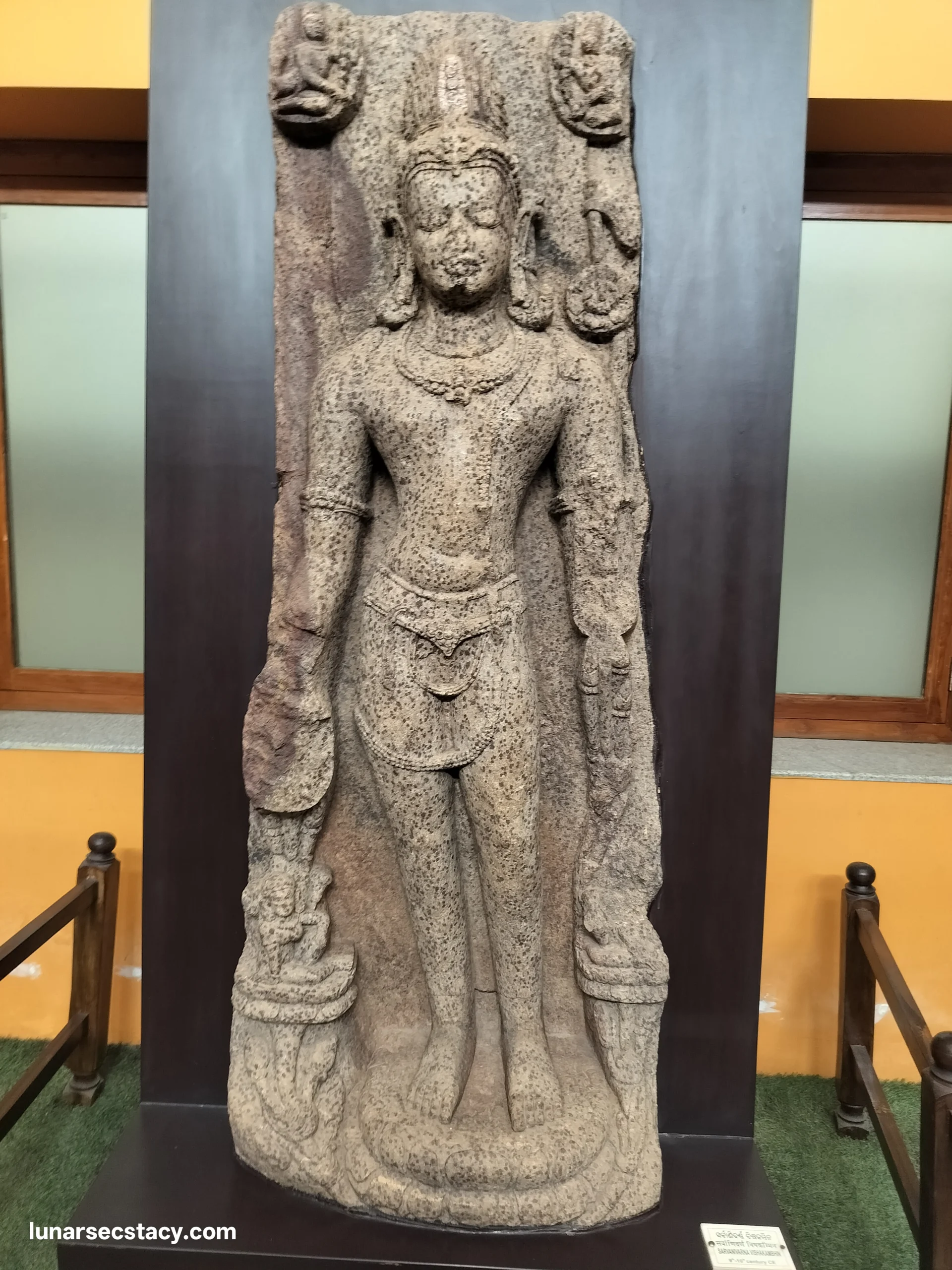
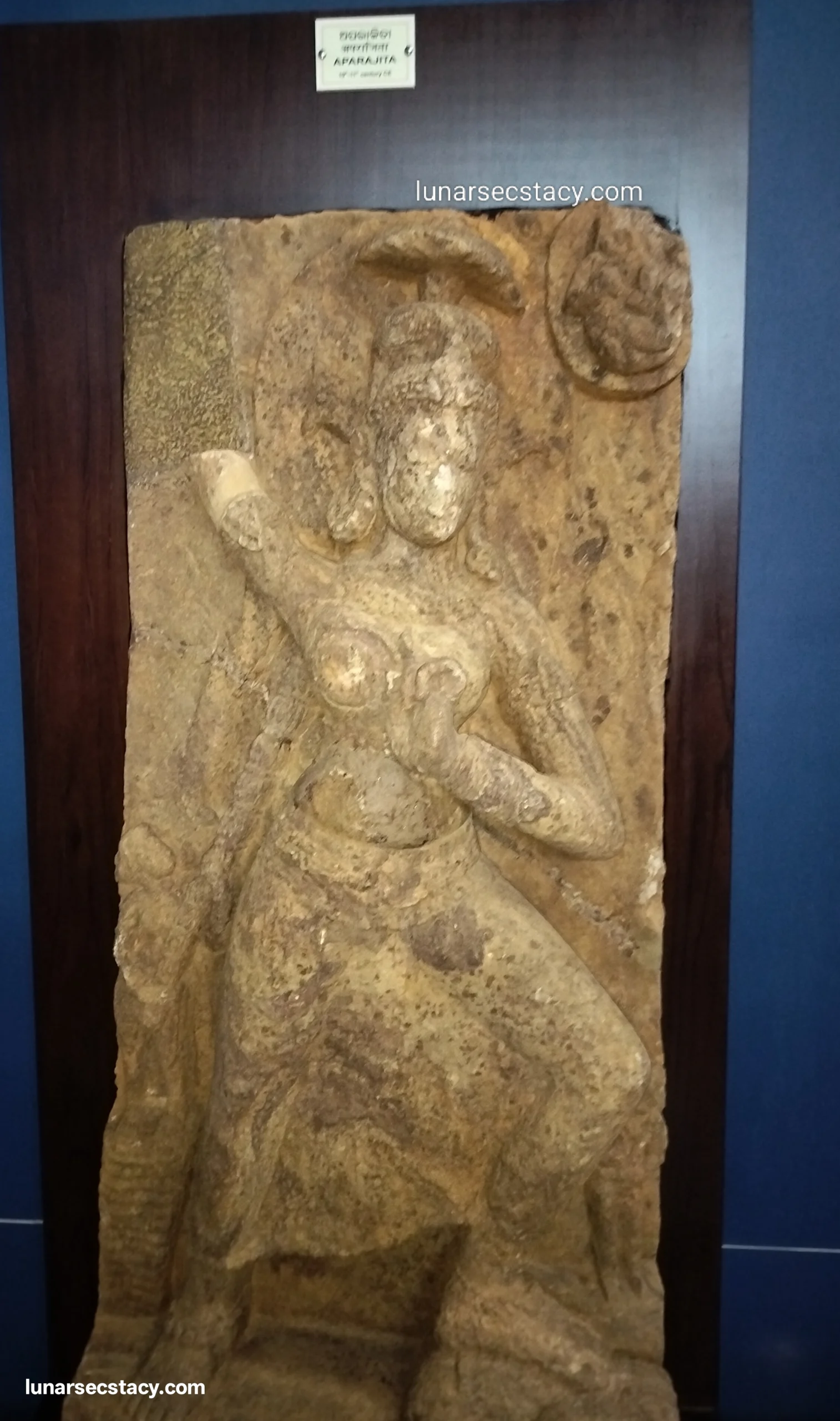
- Vajrayana Deities: Images of Tara , Avalokiteshvara, Manjusri, and Aparajita.
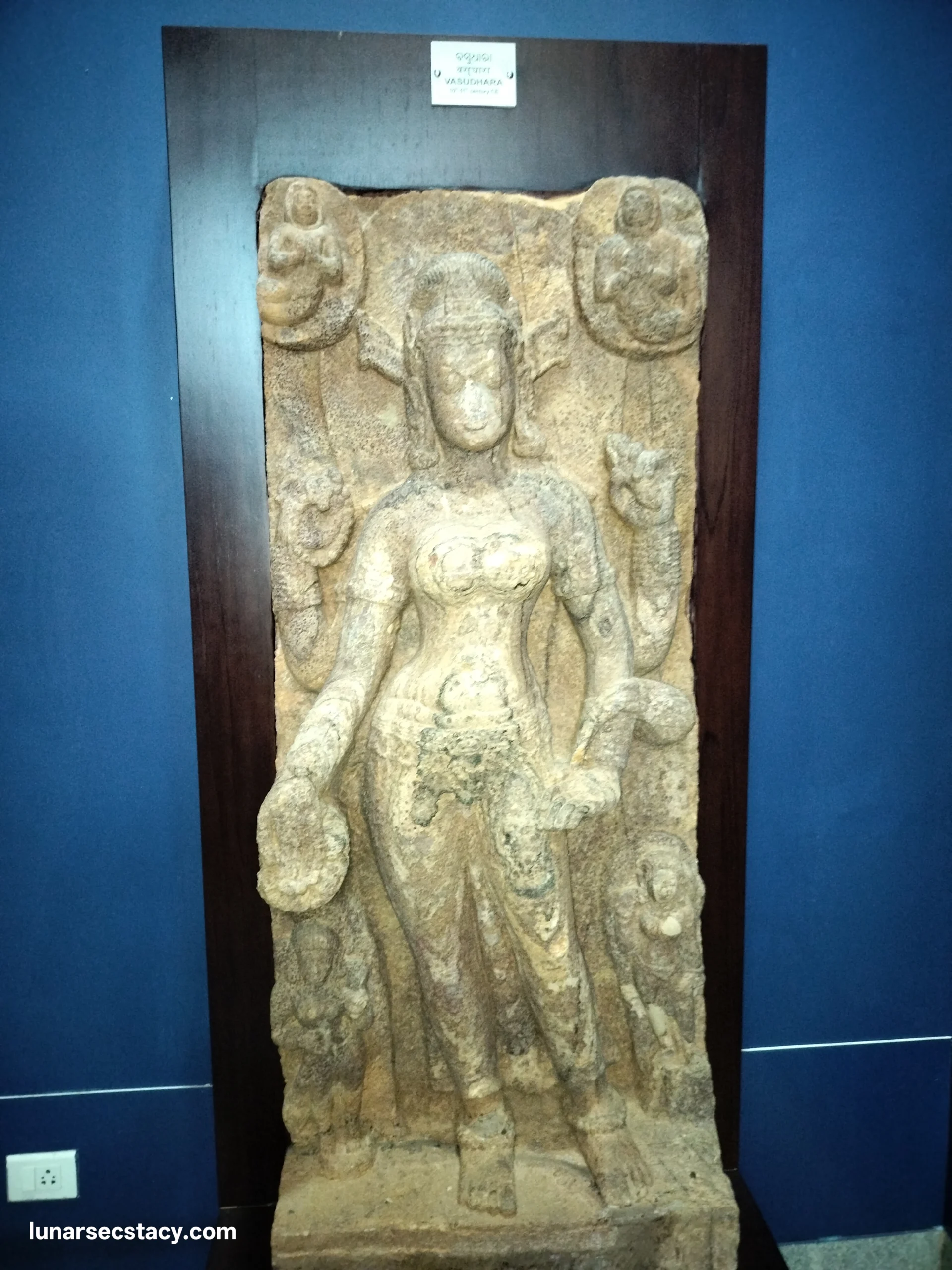
- Hariti: Representations of the goddess Hariti, sometimes breastfeeding or holding a child.
- Other: Ornate, carved chlorite doorframes and over 700 miniature votive stupas.
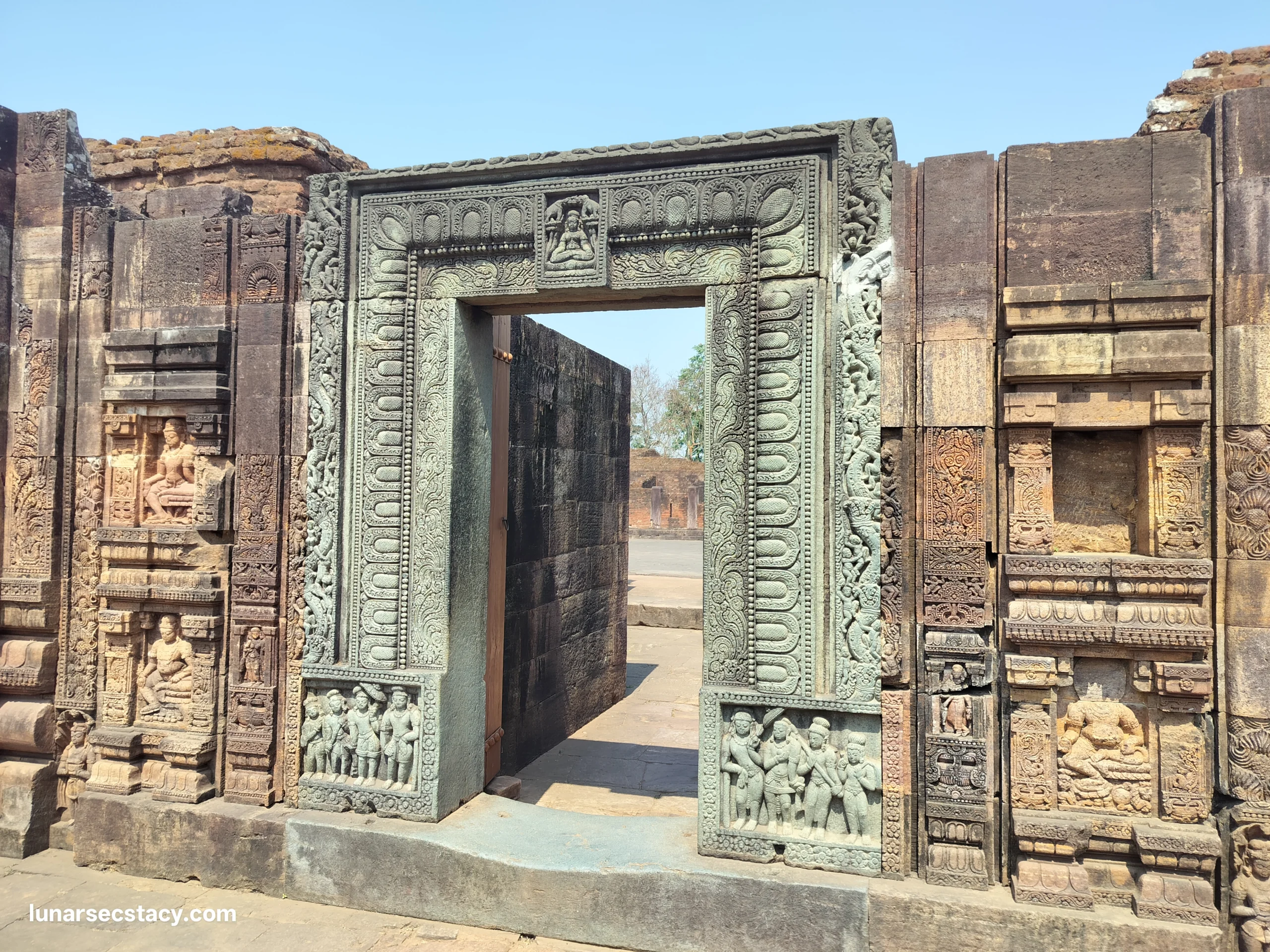
The main entrance door jamb of Ratnagiri monastery (Monastery 1) is a 9th-century masterpiece of Indian art, described by archaeologist Debala Mitra as “the loveliest entrance to a structural monastery in the whole of India”. Carved from blue-green chlorite stone, the doorway is noted for its intricate, three-layered design featuring floral scrolls, foliage, and figures like the Goddess Yamuna. Here I have given the photo of the said entrance door jamb.
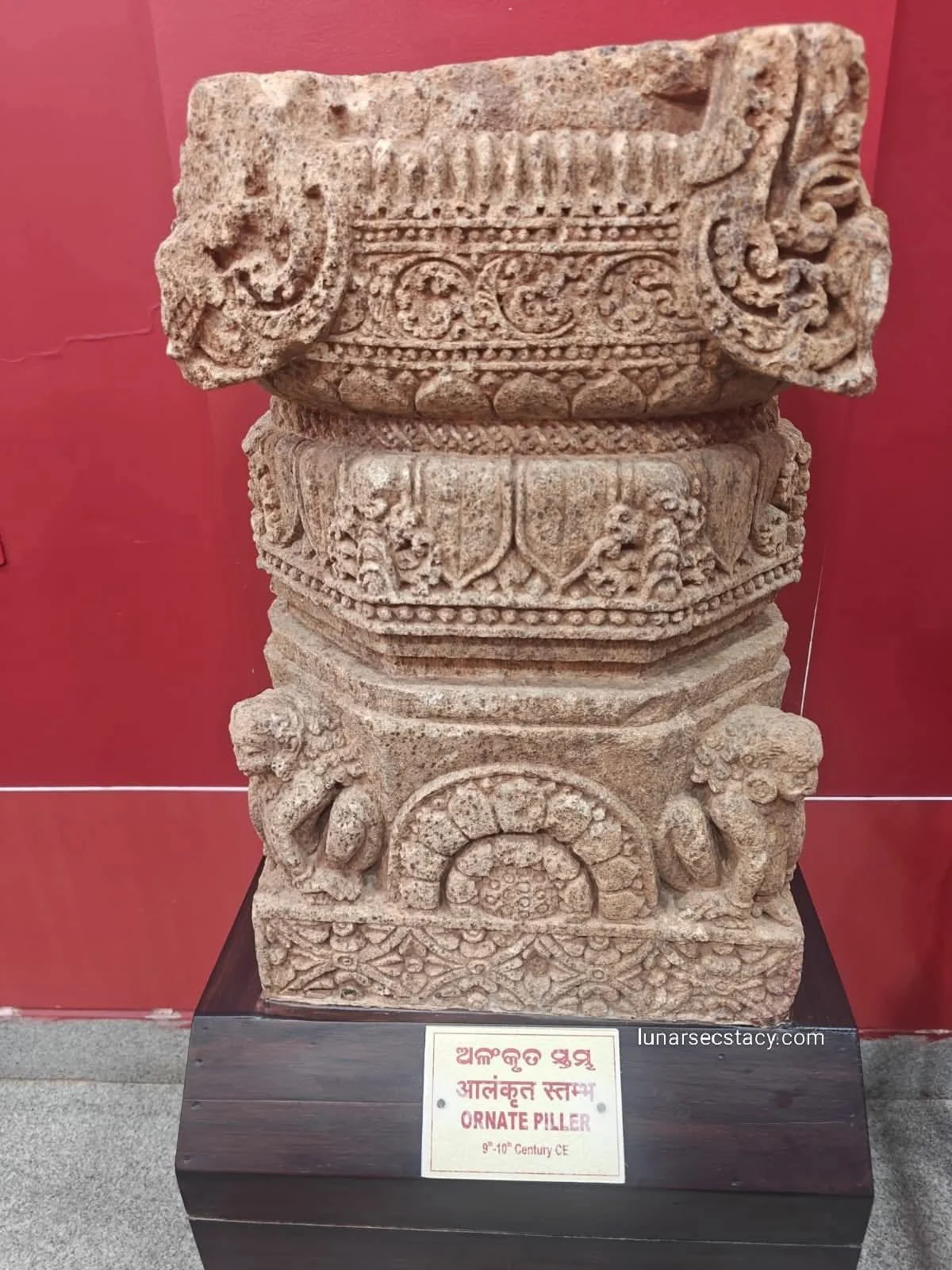
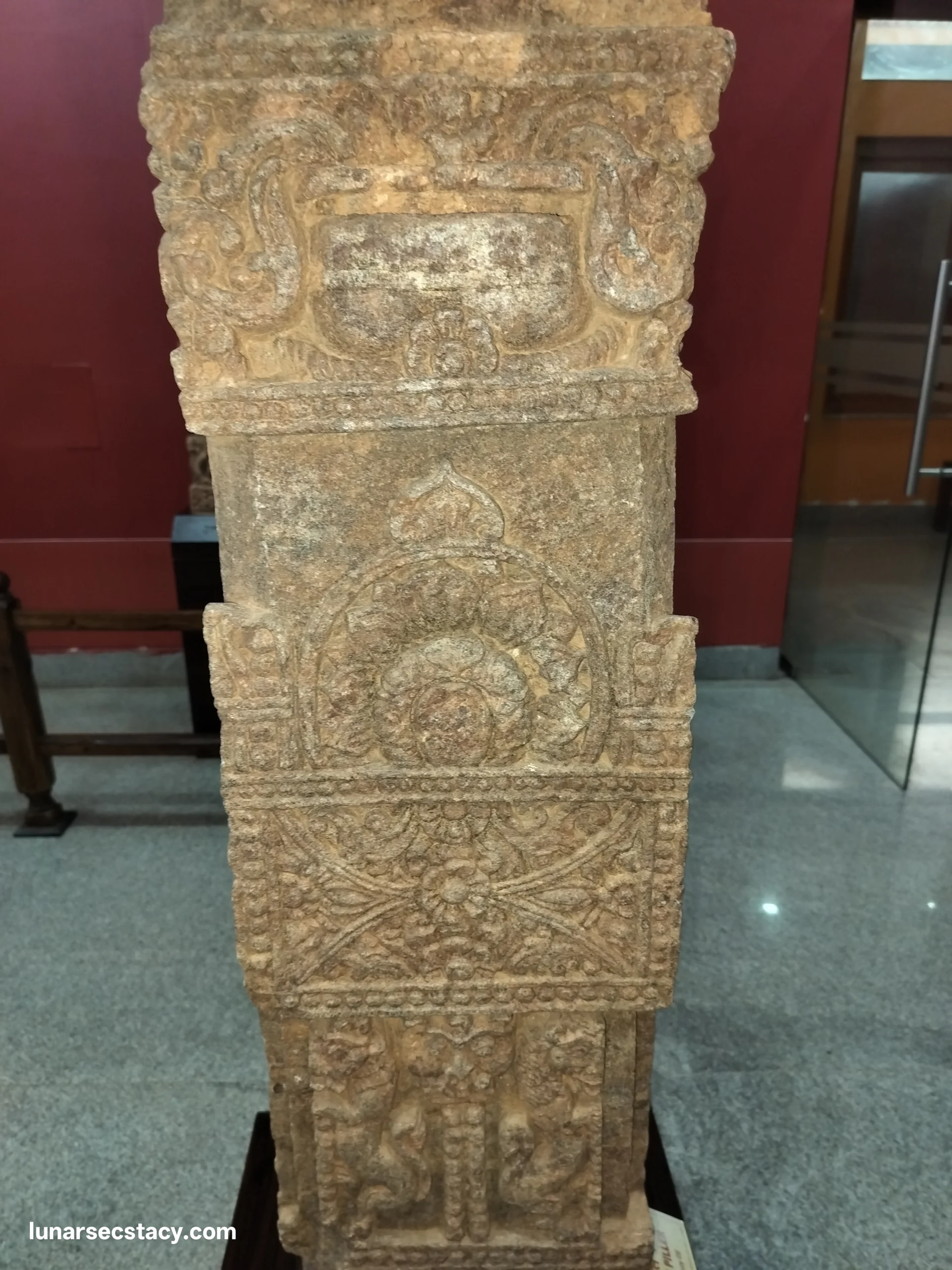
Ornate pillars or otherwise called carved stone pillars at the Ratnagiri, Lalitgiri, and Udayagiri monasteries (the “Diamond Triangle” of Odisha) are primarily made of khondalite and blue-green chlorite. These pillars, dating from the 5th to 13th centuries, feature intricate designs, including lotus medallions and post-Gupta architectural styles. Many columns are part of larger, elaborately designed, multi-pillared halls (monasteries) and pillared entrances.These architectural elements, along with vast numbers of Buddha sculptures and votive stupas, indicate a major center of Tantric Buddhism, comparable in importance to Nalanda.
https://lunarsecstacy.com/2021/03/26/romance-with-metals-through-lost-wax-method-thousand-years-back/
Buddhist Iconography (2nd Century BCE – 13th Century AD) Available At Lalitagiri
- Relics: A large stupa containing stone caskets with suspected bone relics of the Buddha.The most significant discovery at Lalitgiri was a golden casket containing what are believed to be relics of Lord Buddha and his disciple. These relics are housed in a series of nested caskets, with the outermost layer being khondalite, followed by steatite, silver, and gold. The caskets were found within the ruins of a stupa and are currently displayed in the museum at Lalitgiri, which was built to display the relics.The relics are presumed to be bone or tooth fragments of Buddha and his prominent disciple, possibly Sariputta or Mahamogallana. The discovery of these relics at Lalitgiri is considered the first of its kind in eastern India.
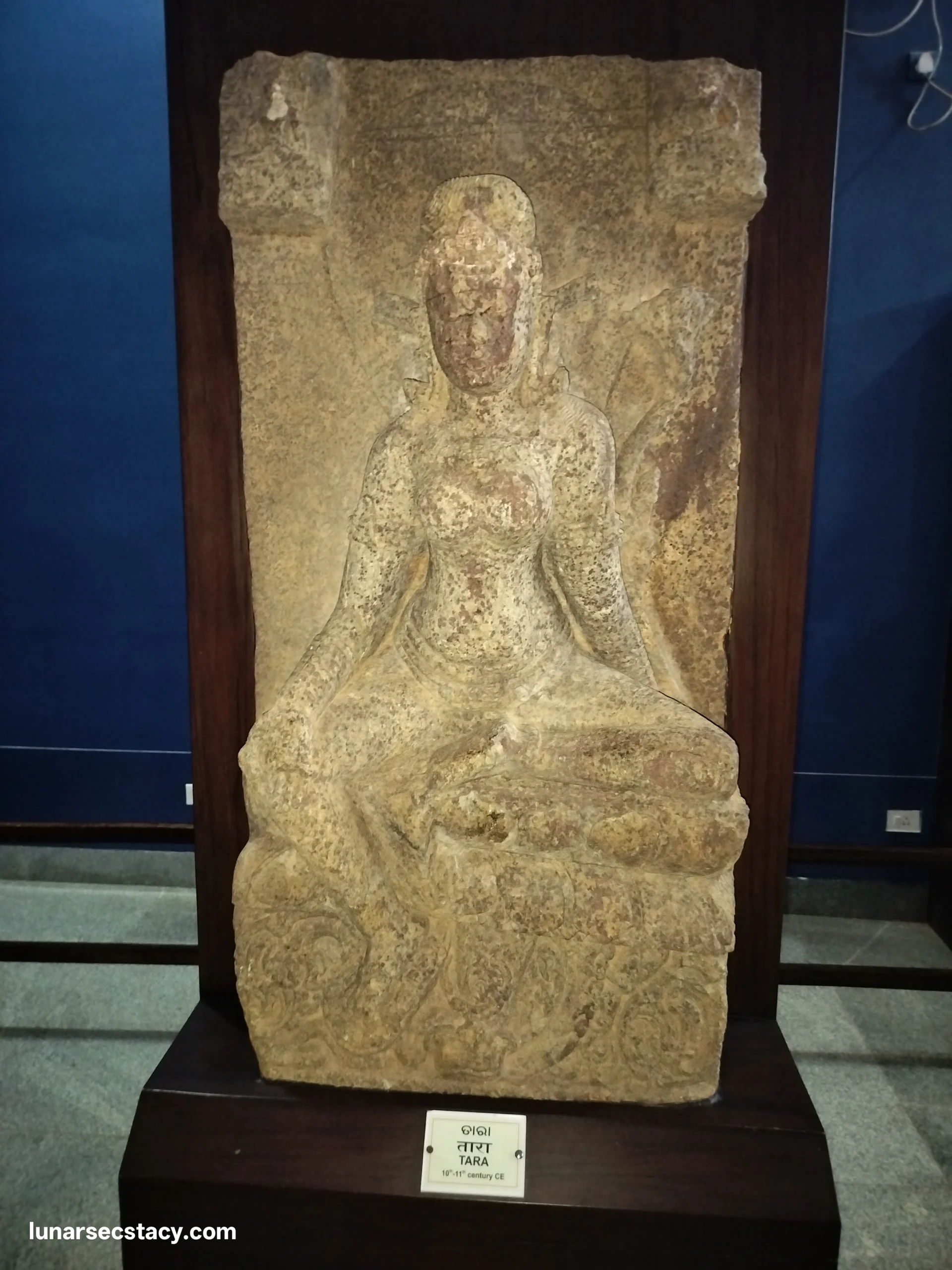
- Sculptures: Similar to Ratnagiri, featuring Mahayana imagery, including Tara and Hariti.
- Stupas & Architecture: A major apsidal chaitya hall, one of the few in Odisha.
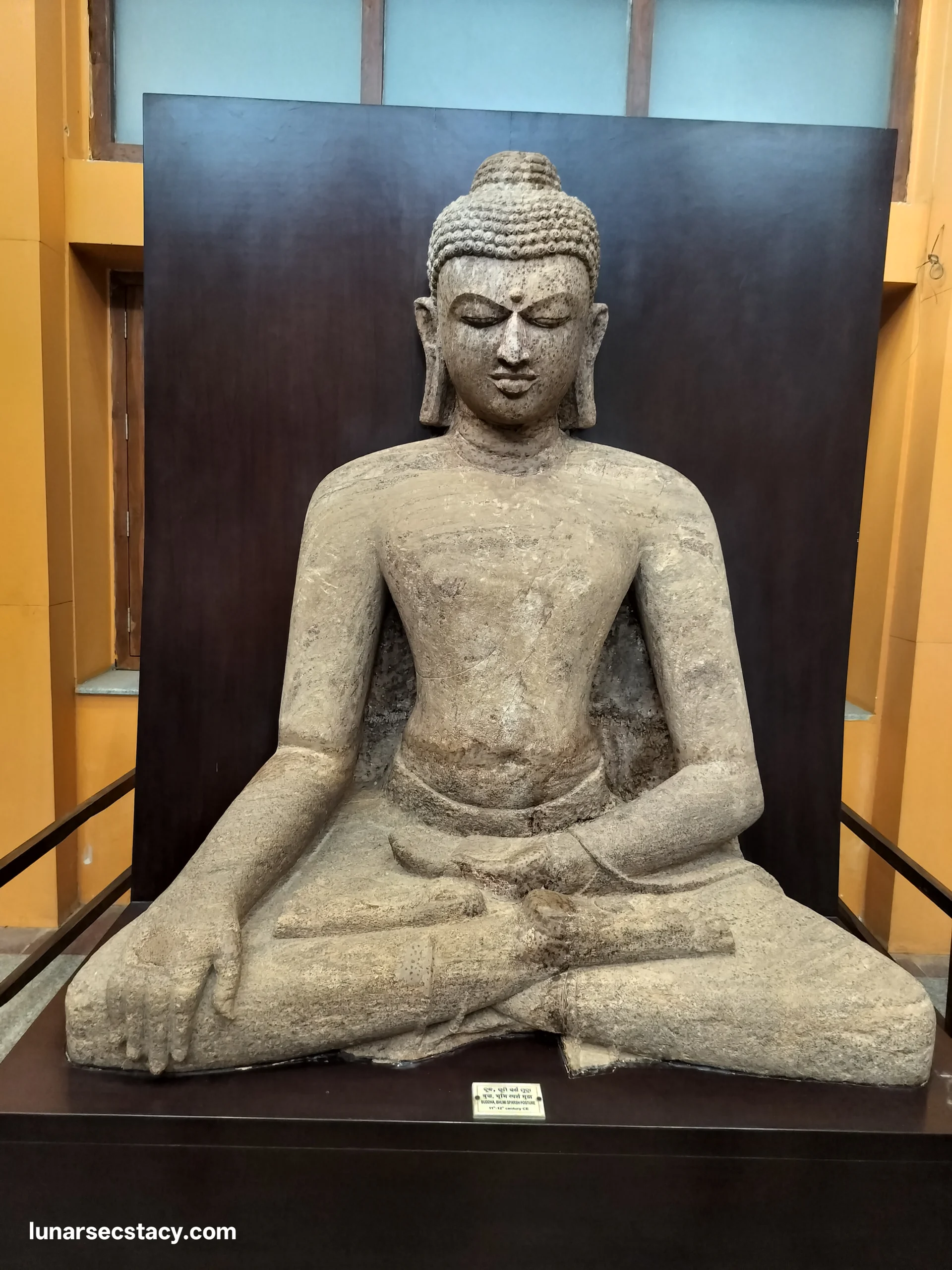
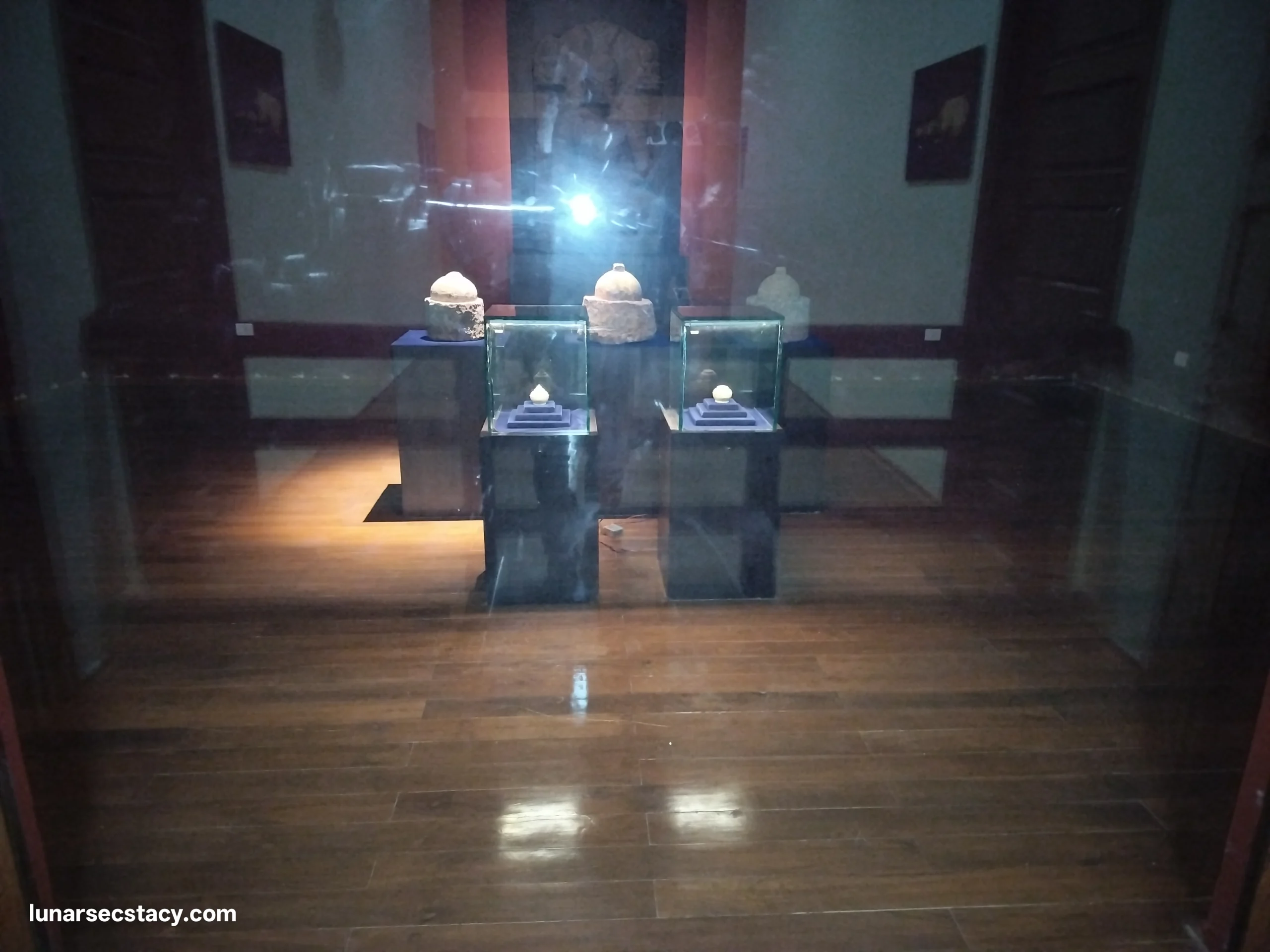
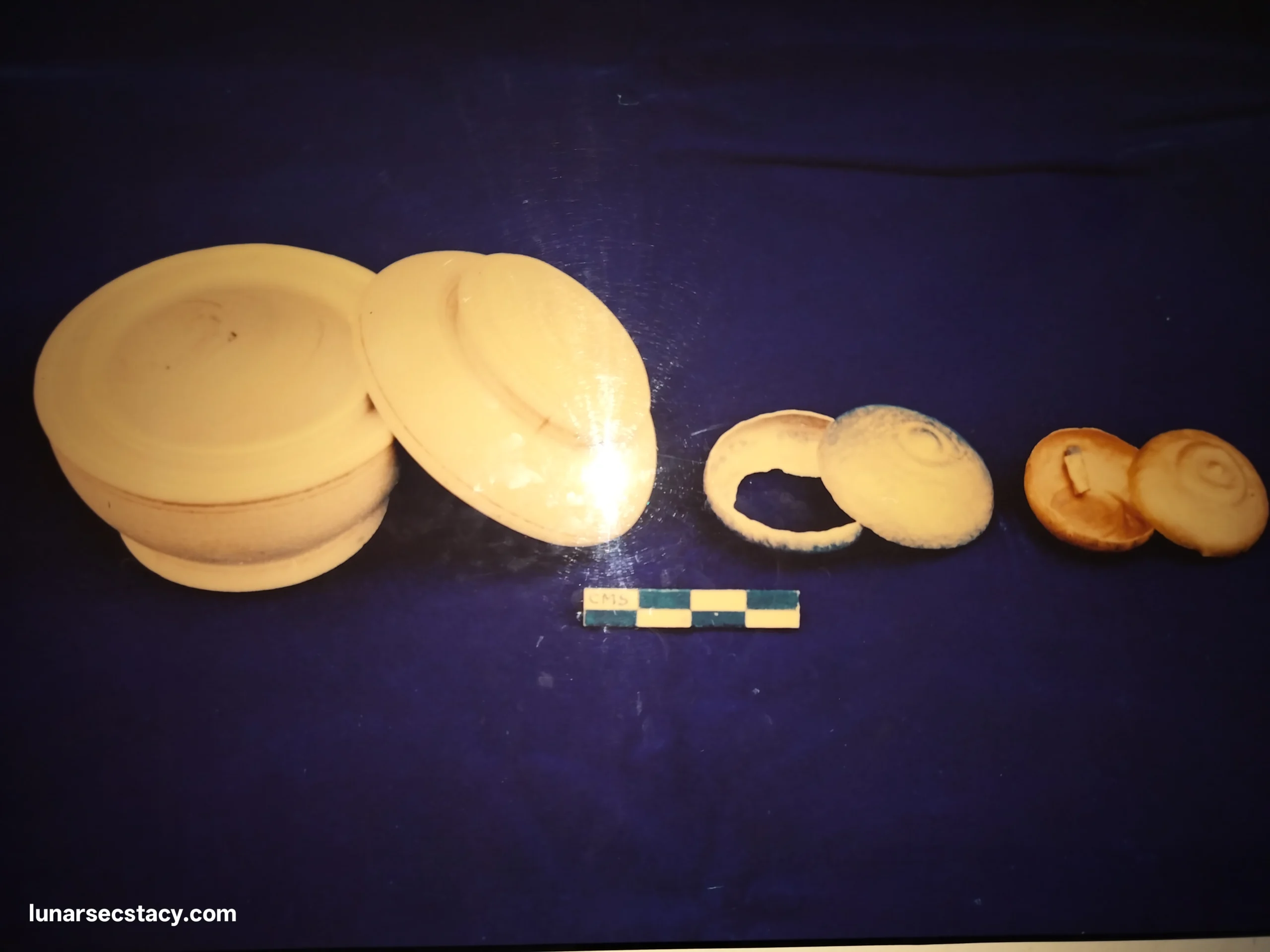
Common Features
- Both sites showcase a shift from Mahayana to Tantric (Vajrayana) Buddhism over centuries.
- Large, serene, and detailed sculptures in chlorite and khondalite stone.
Ratnagiri Museum & Exhibit Highlights
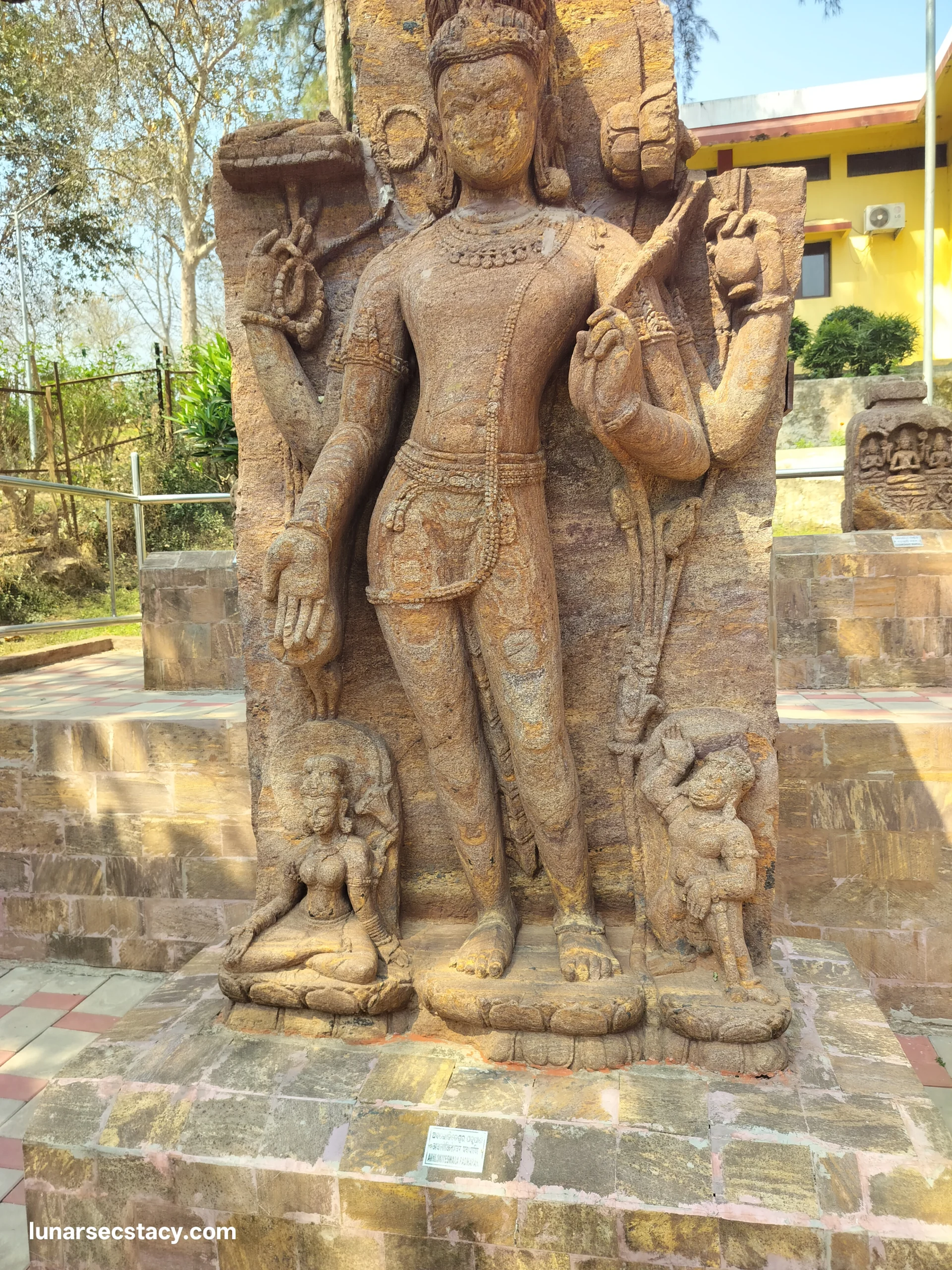
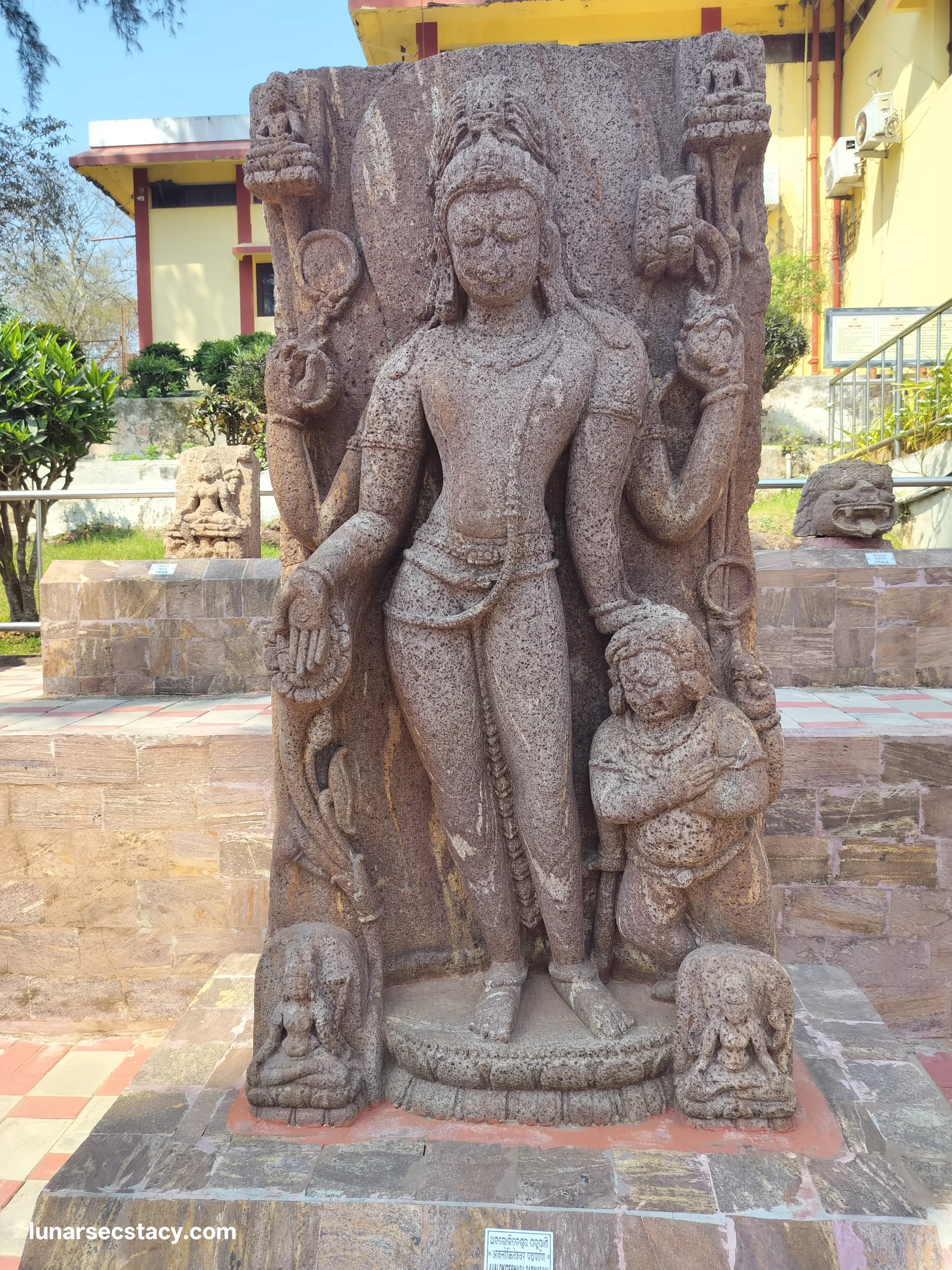
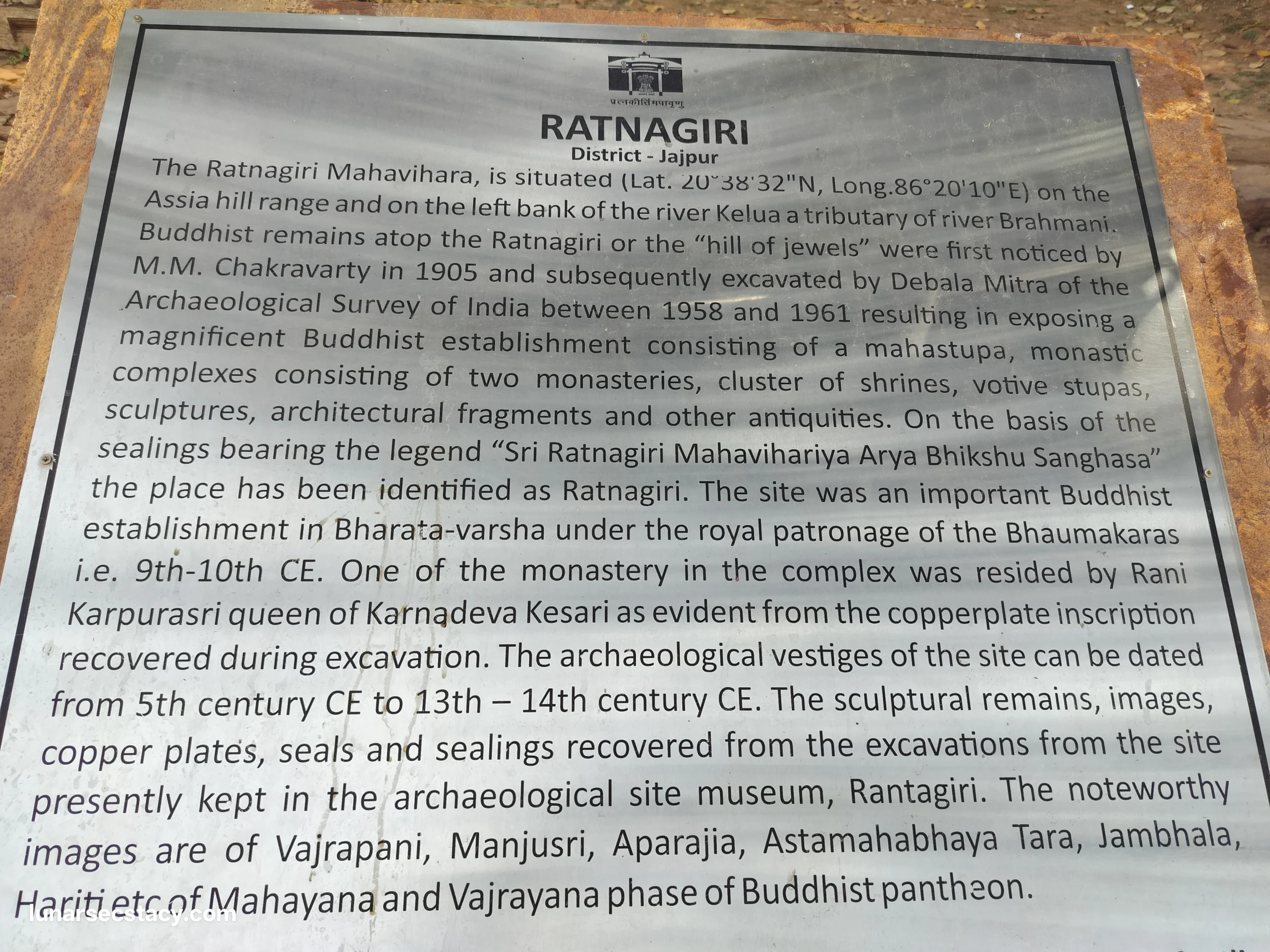
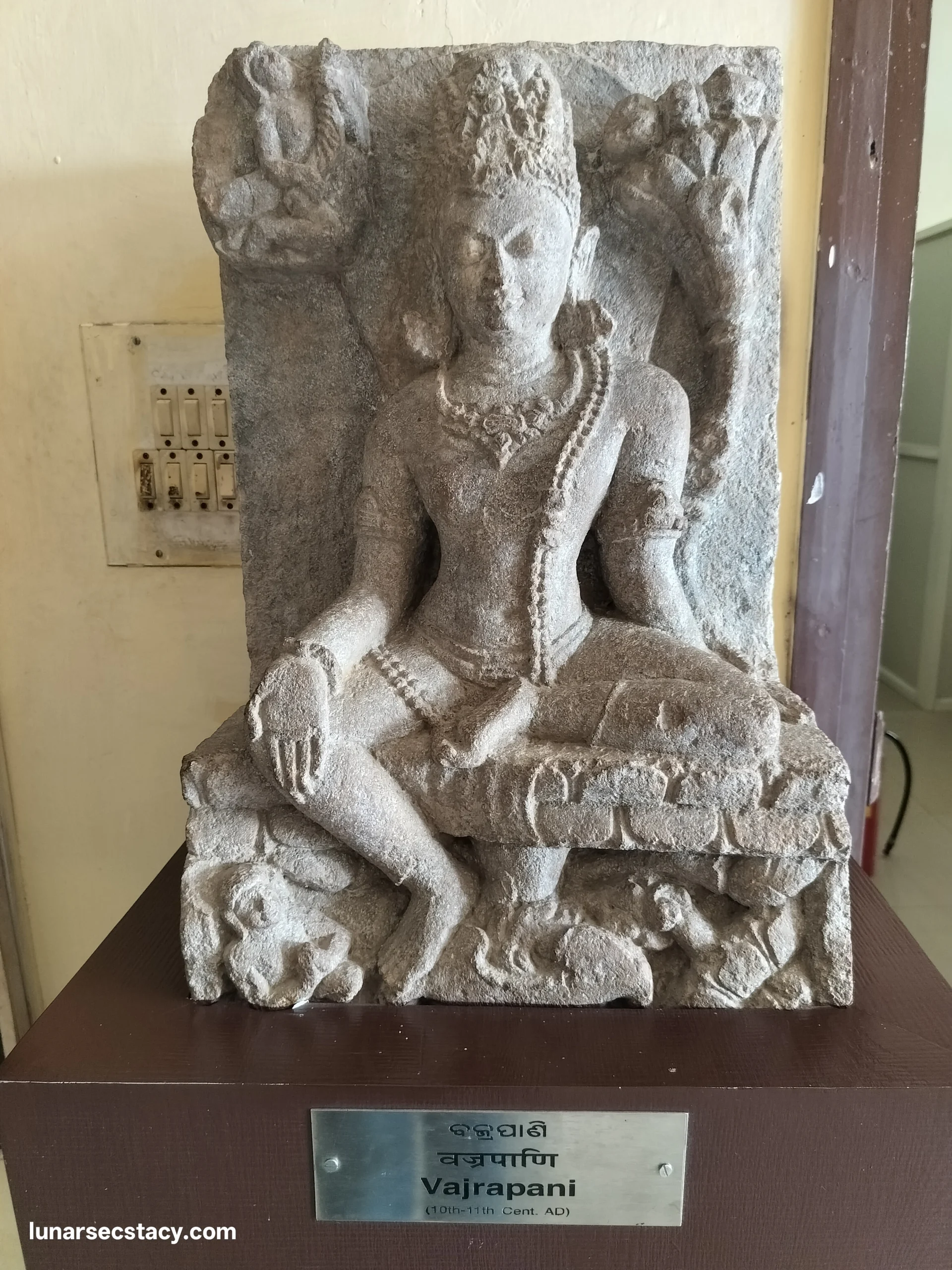
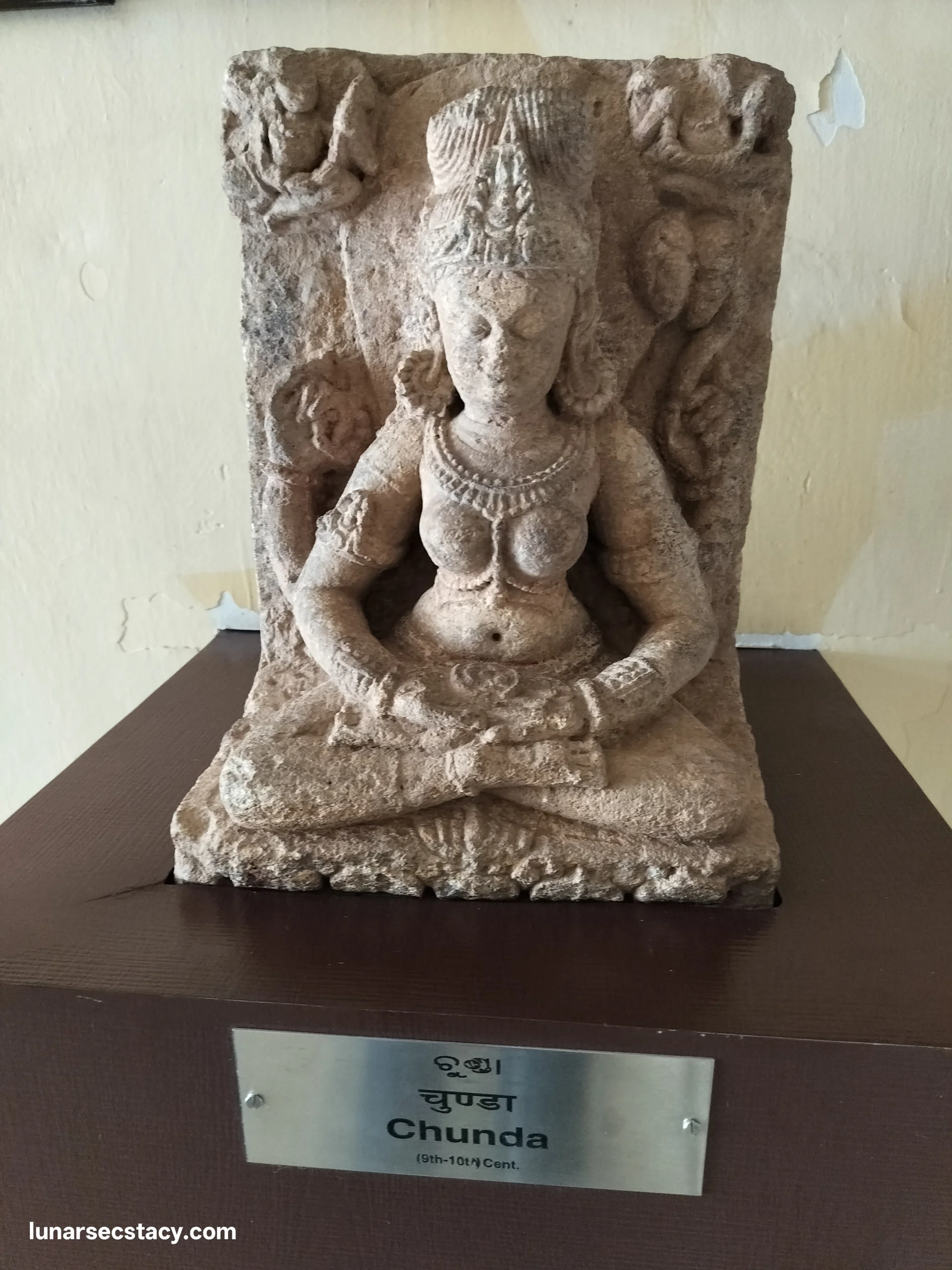
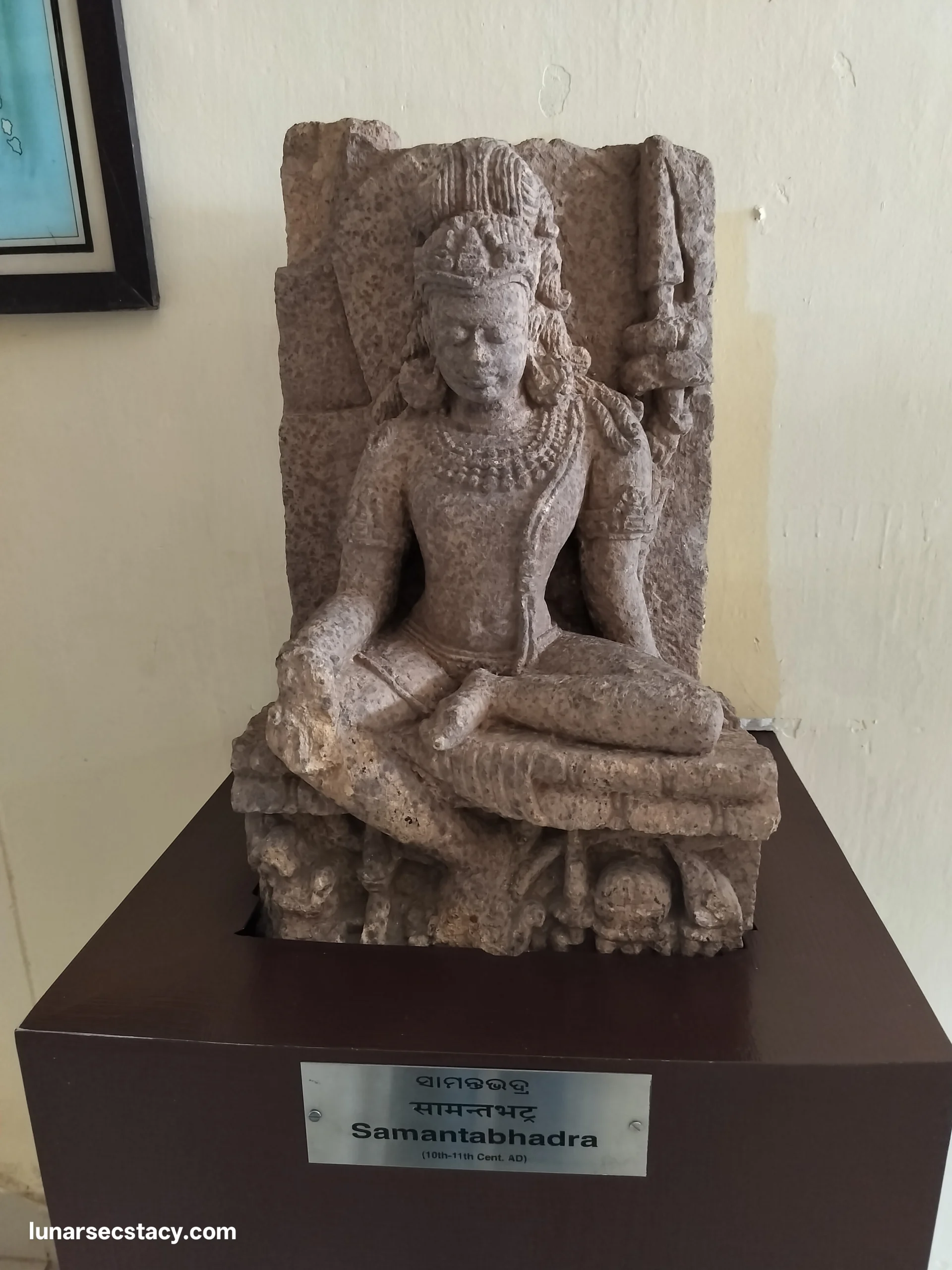
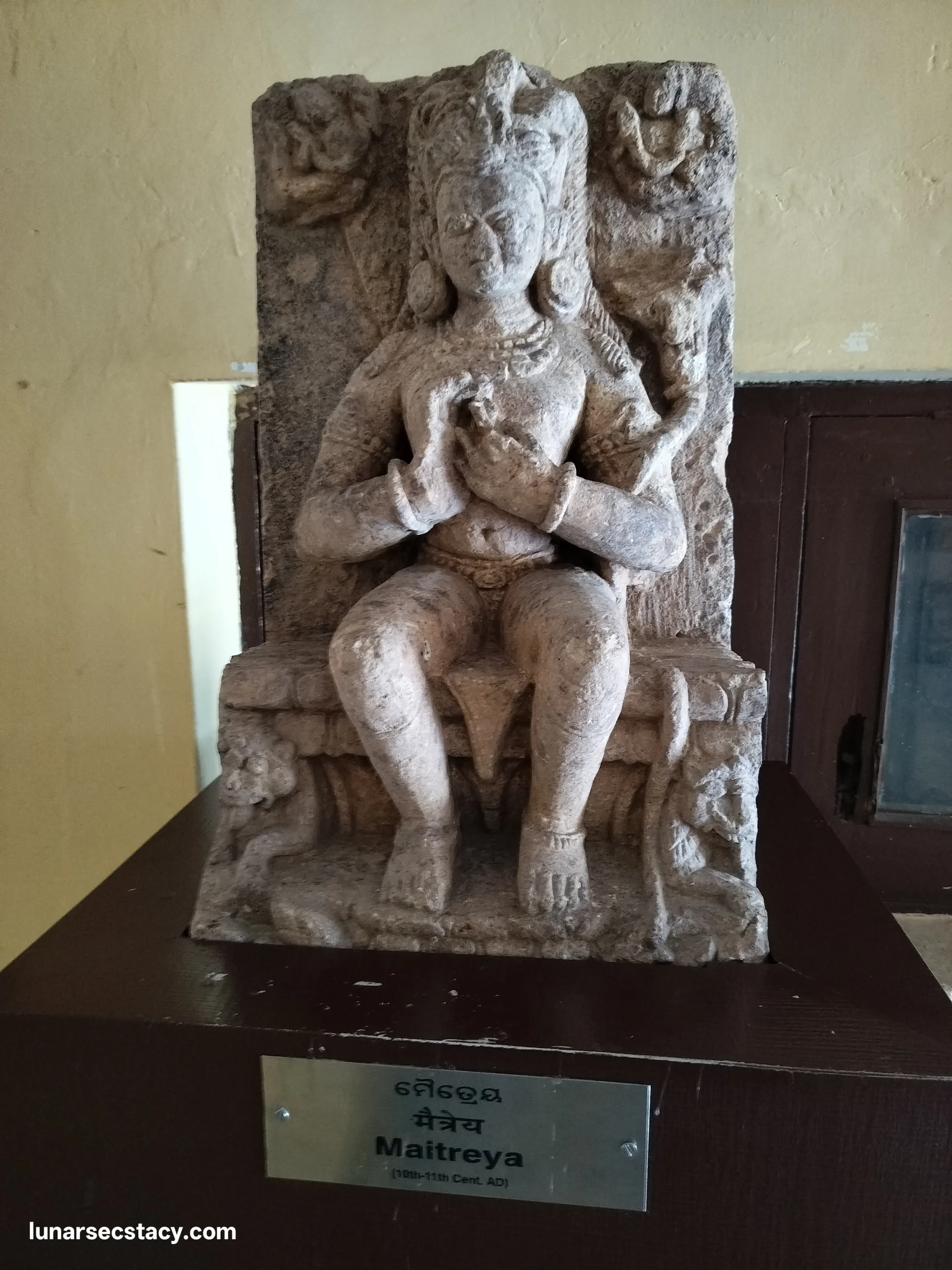
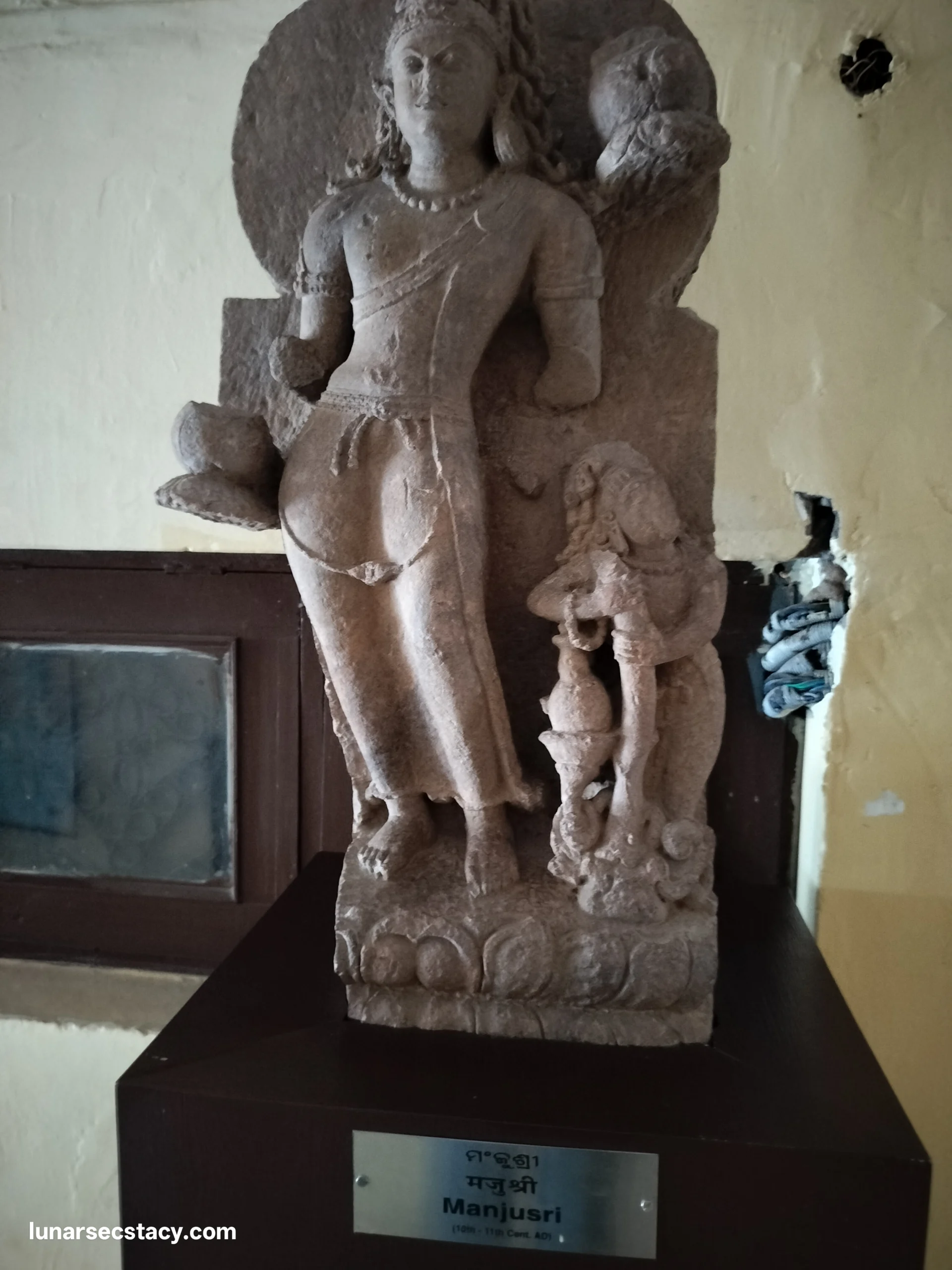
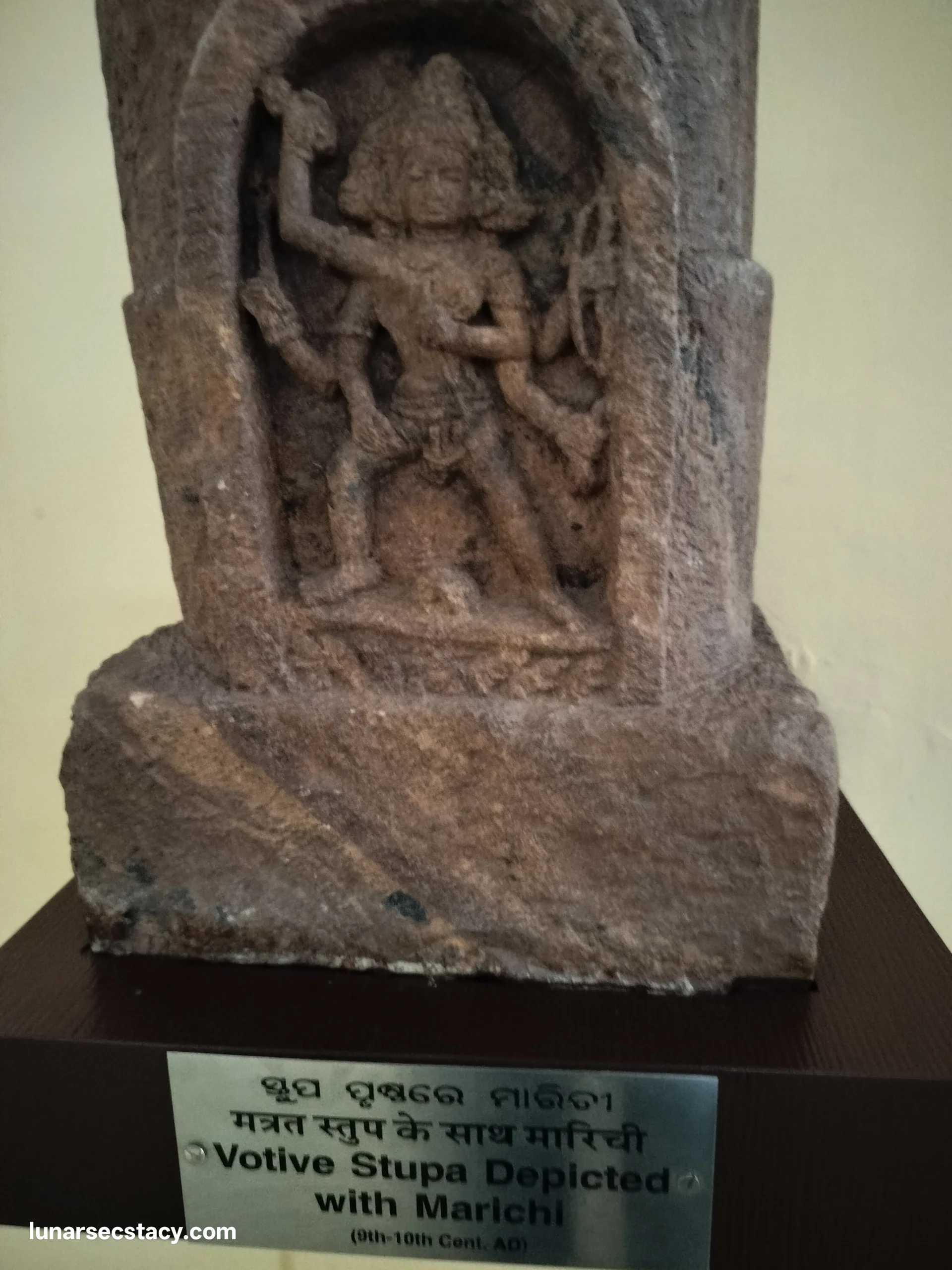
This is Marichi sculpted in a votive stupa excavated in Ratnagiri.Marichi is similar to Hindu Sun God, having a chariot drawn by pigs instead of horses. According to Buddhist literature , she has either 2, 6 , 8, 10 or 12 arms. She may have 1,3, 5 or 6 faces . She is recognised by her sow face and those seven pigs that run her chariot. The needle and string are her characteristic symbols by which she is believed to sew up the mouth and the eyes of the wicked. These votive stupas are plentily available in the Ratnagiri monastery in Odisha..
https://lunarsecstacy.com/2021/03/26/romance-with-metals-through-lost-wax-method-thousand-years-back/
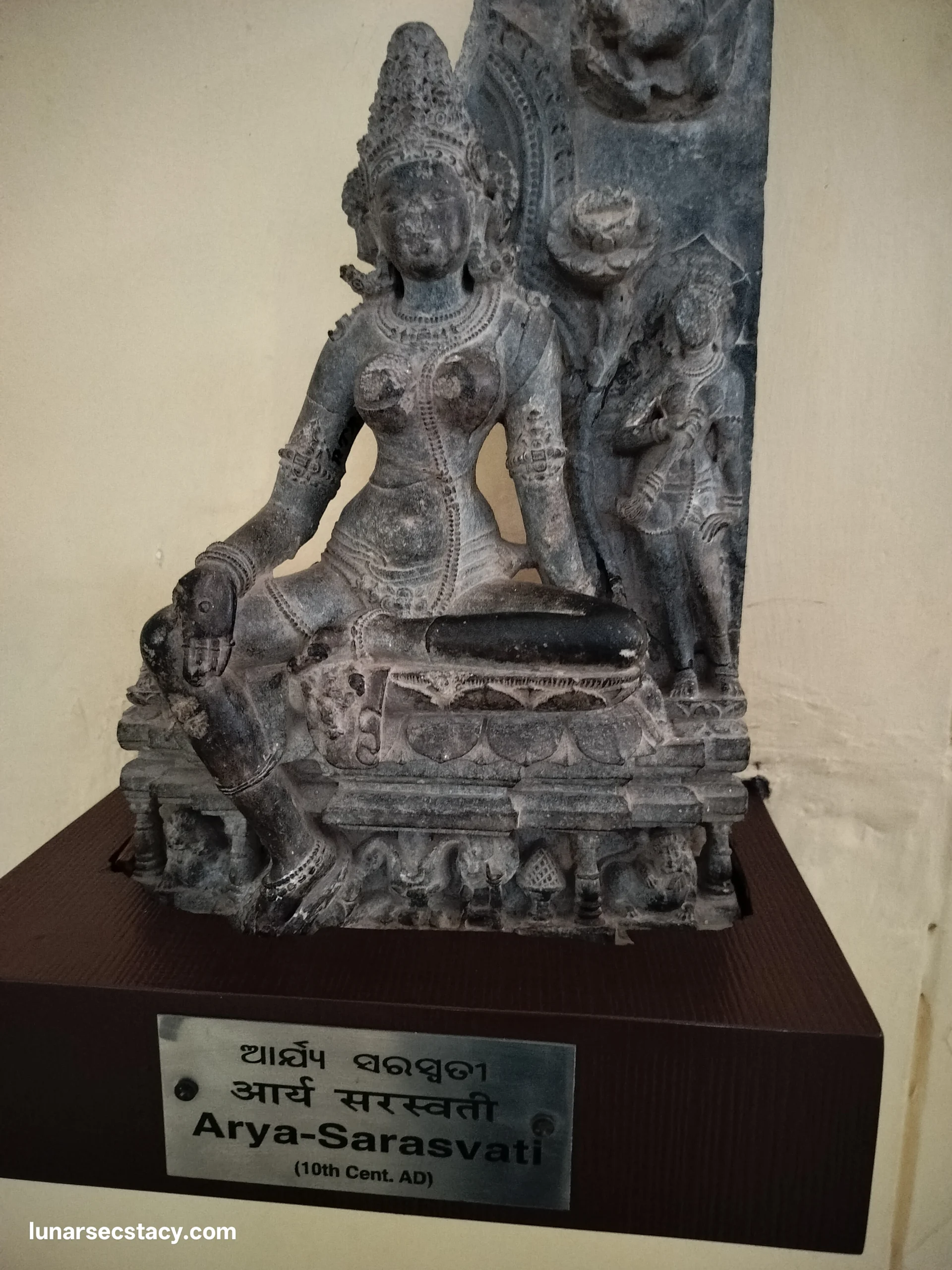
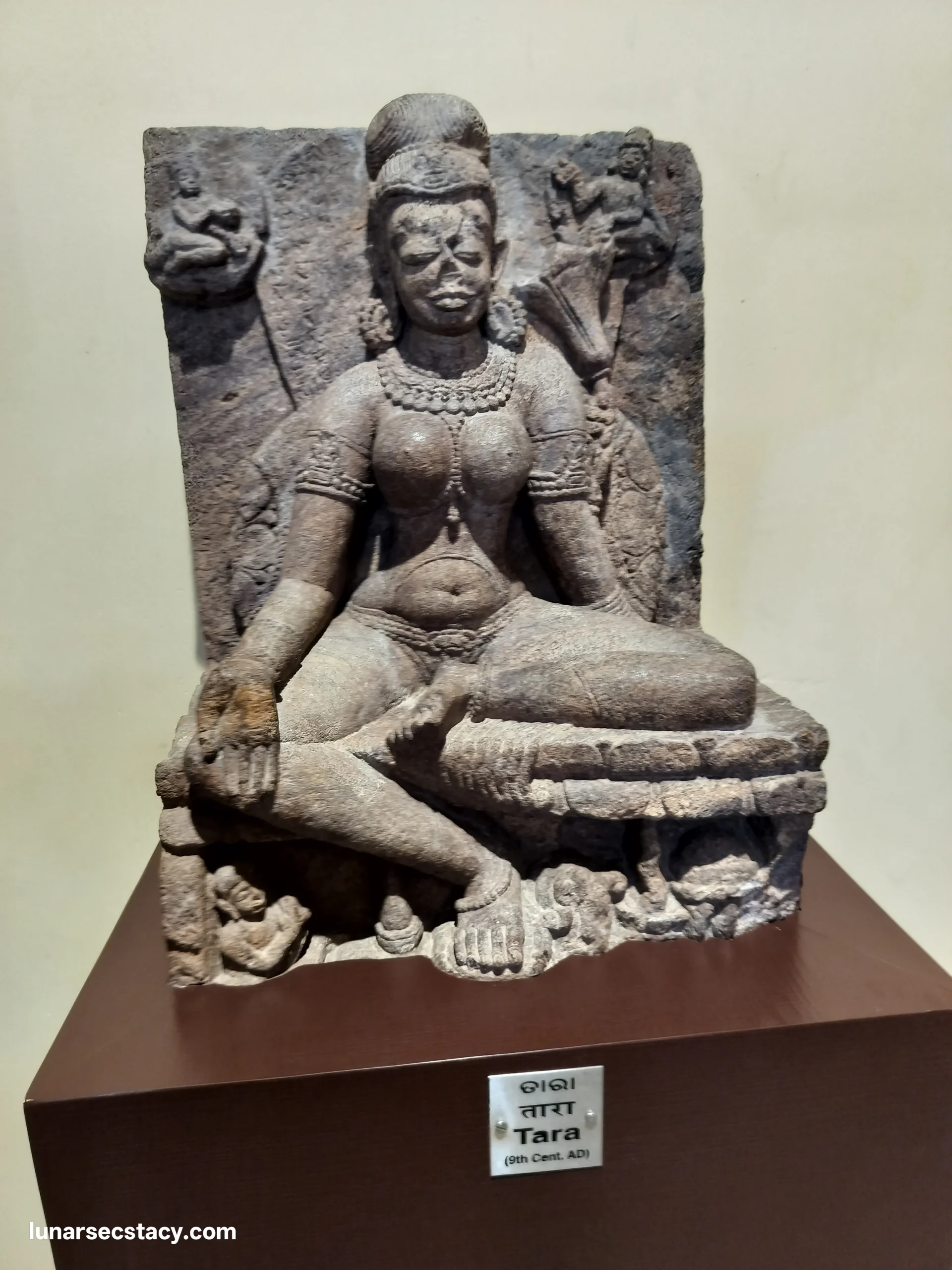
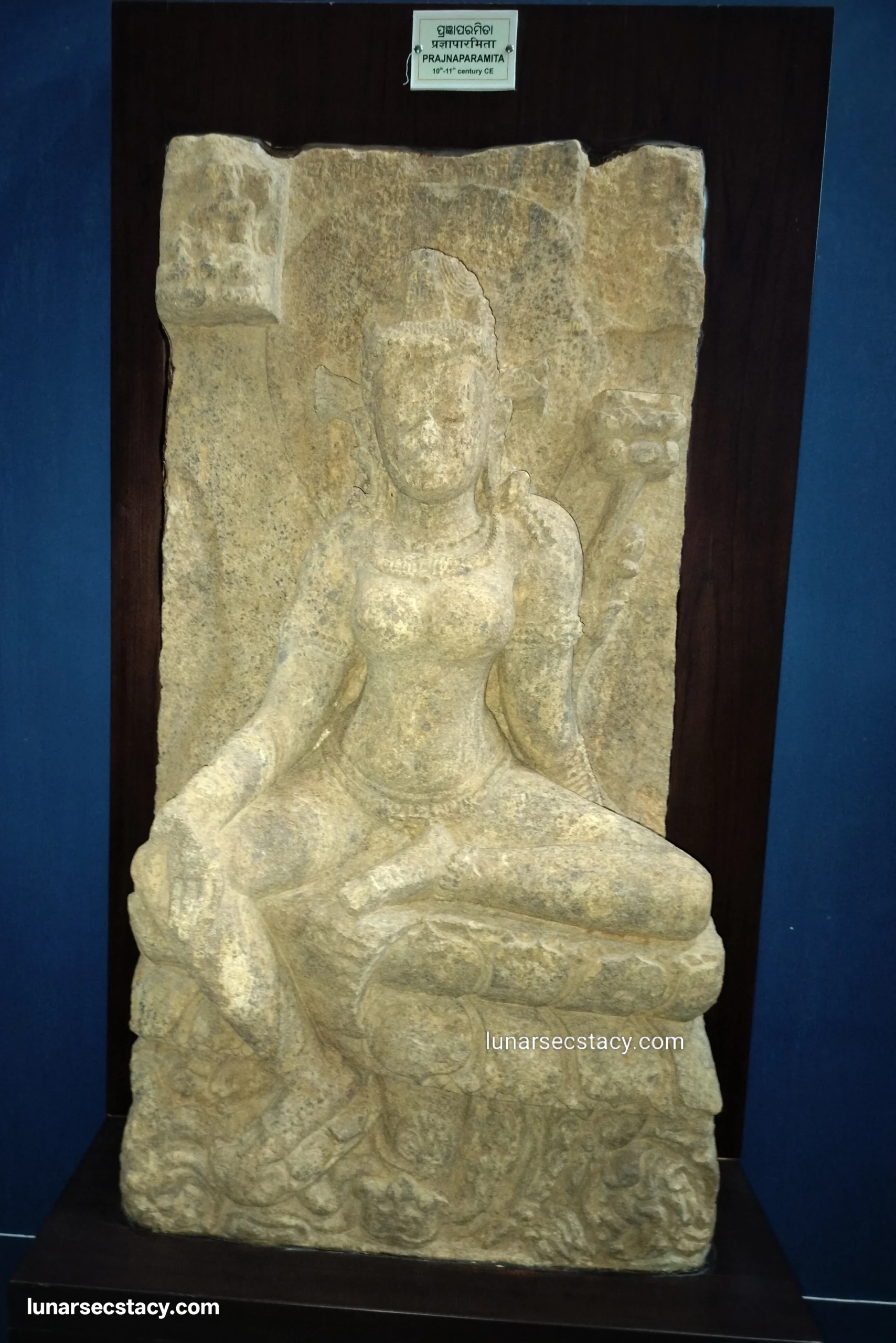
Tara is a female Bodhisattva in mahayana Buddhism, who appears as a female Buddha in Vajrayana Buddhism. She is known as the ‘mother of liberation’ and represents the virtues of success in work and achievements. At Ratnagiri, we find a unique form of Tara called Astamahabhaya, who protects the devotees from 8 different hurdles. You can learn in detail about the Ratnagiri Mahavihara through the following link.
https://lunarsecstacy.com/2021/03/26/romance-with-metals-through-lost-wax-method-thousand-years-back/
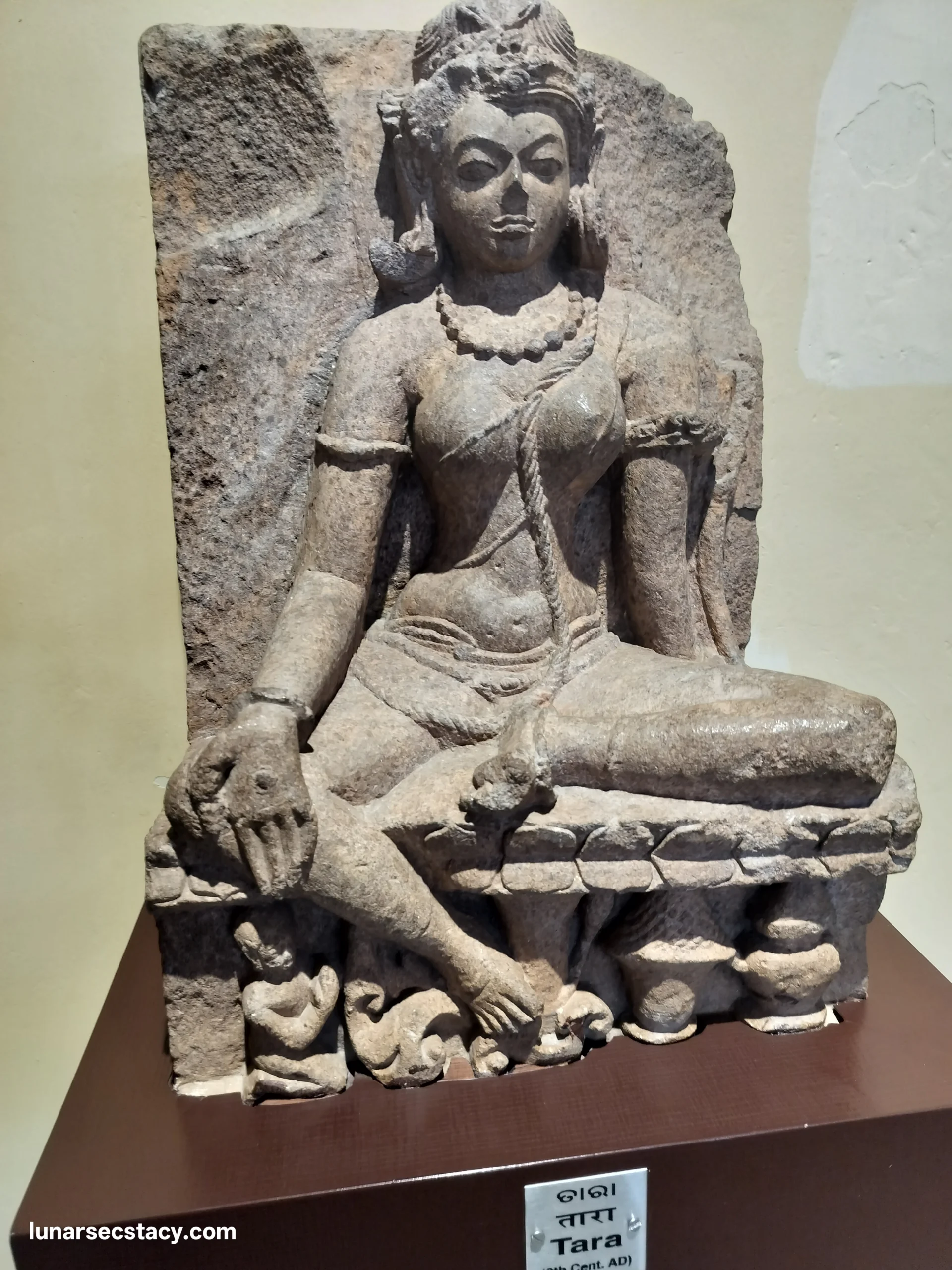
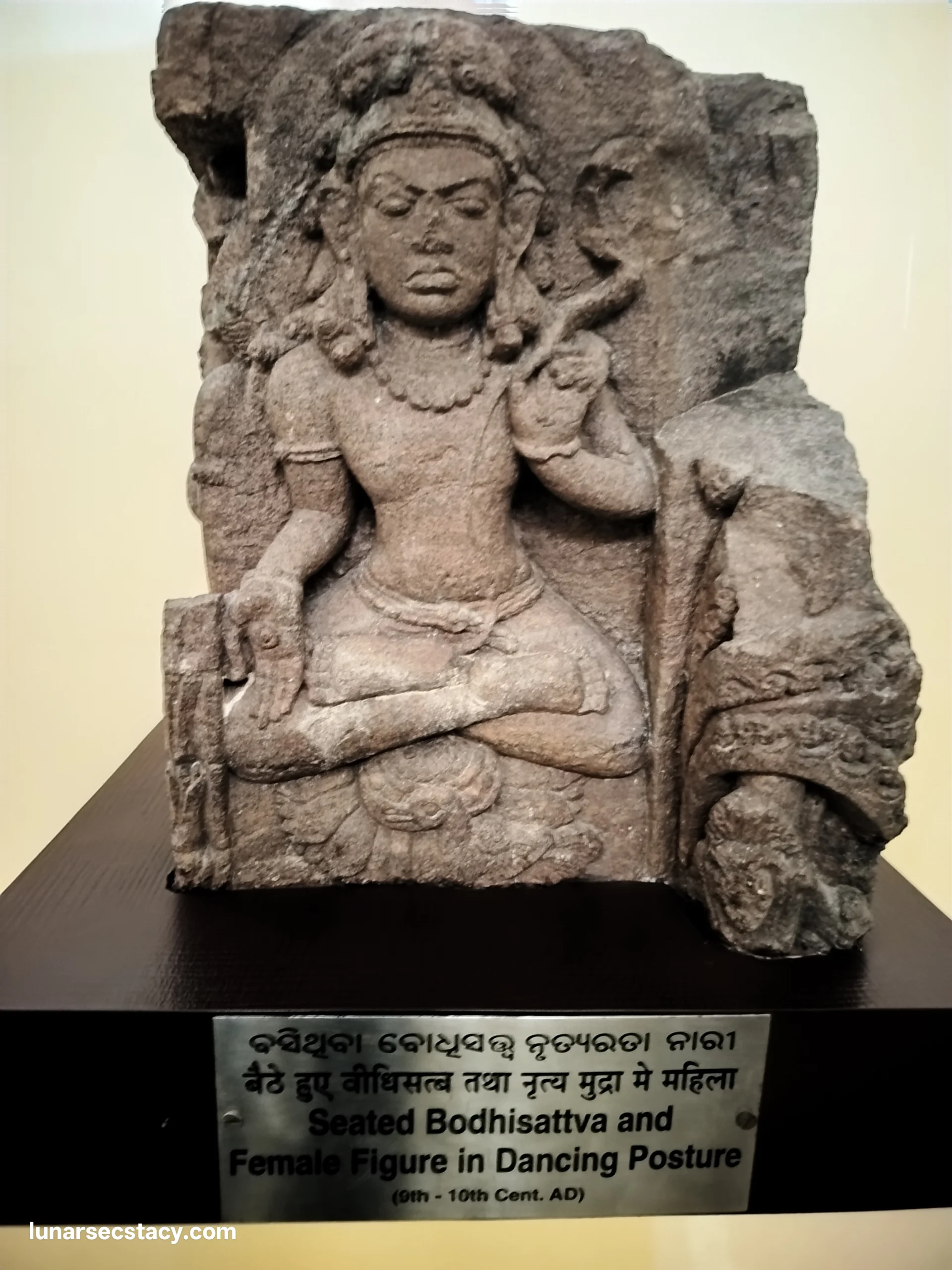
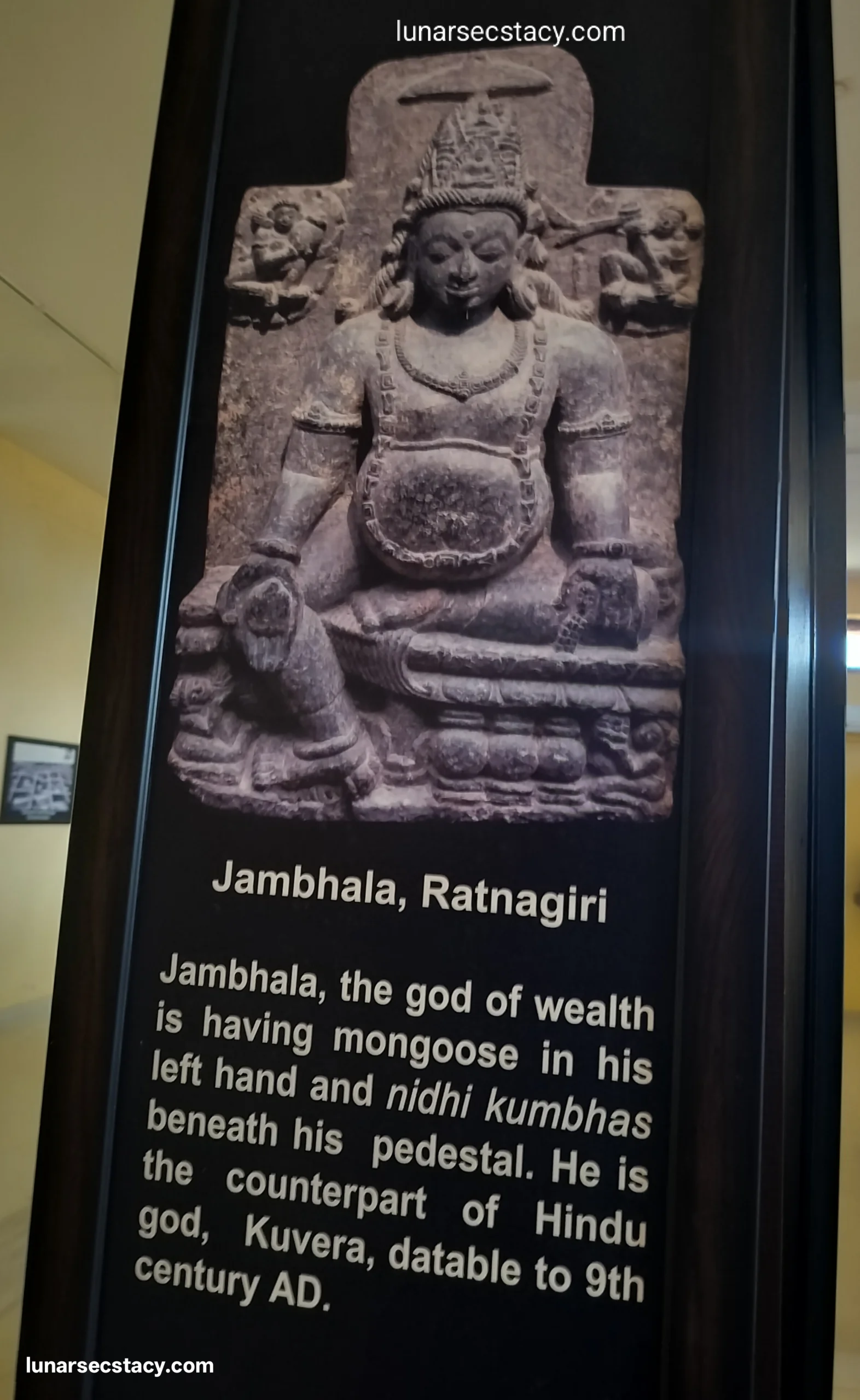
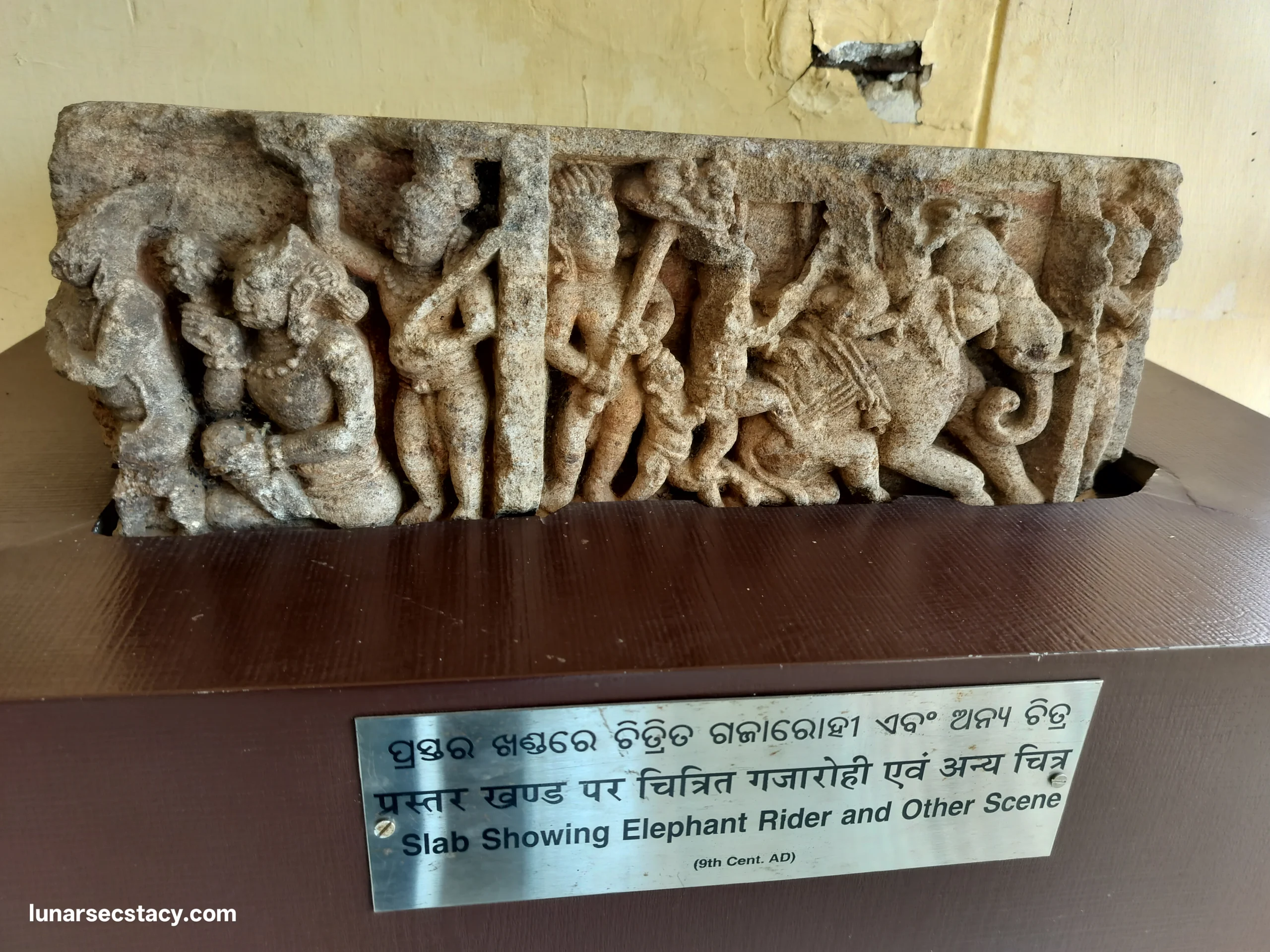
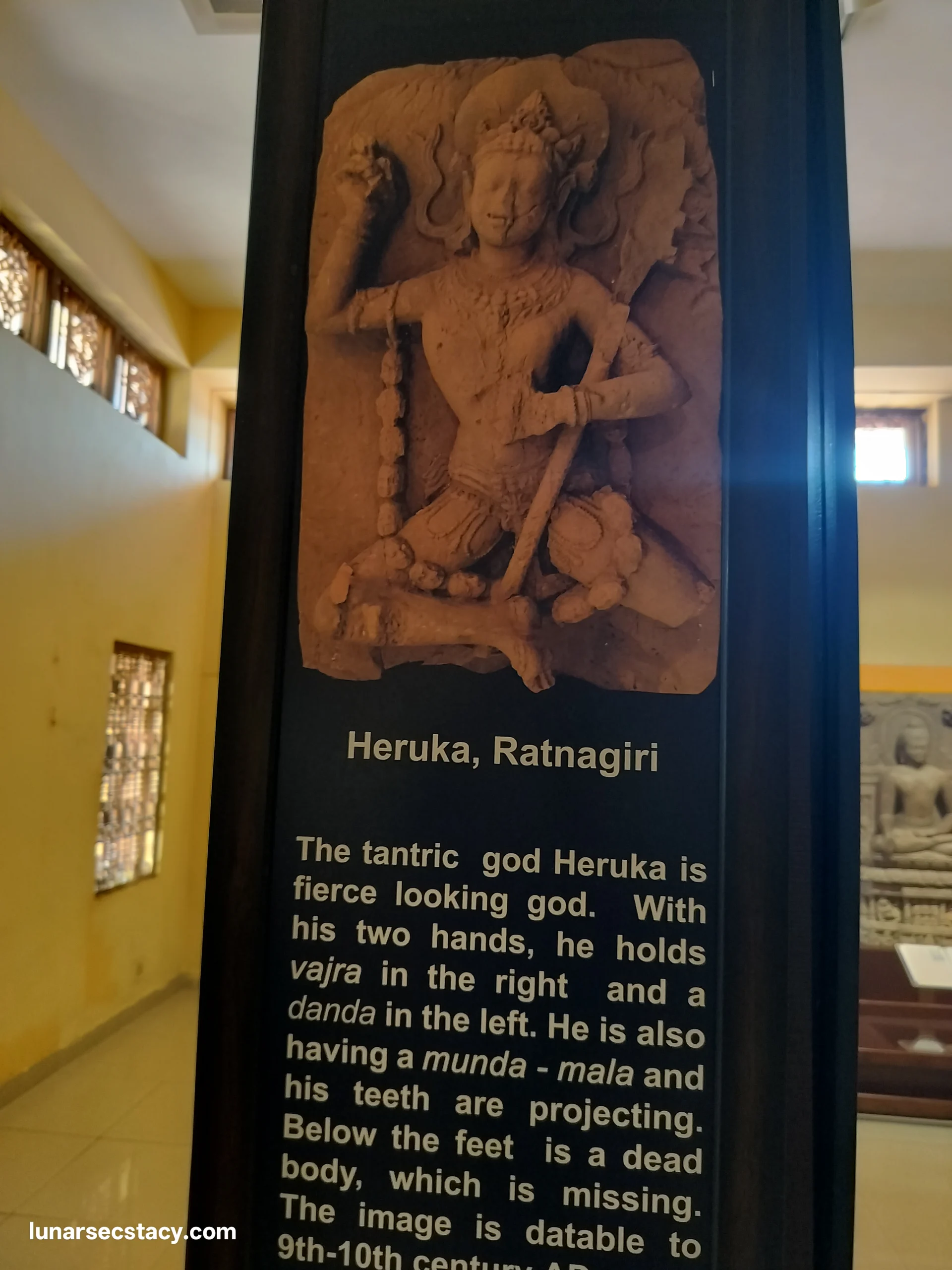
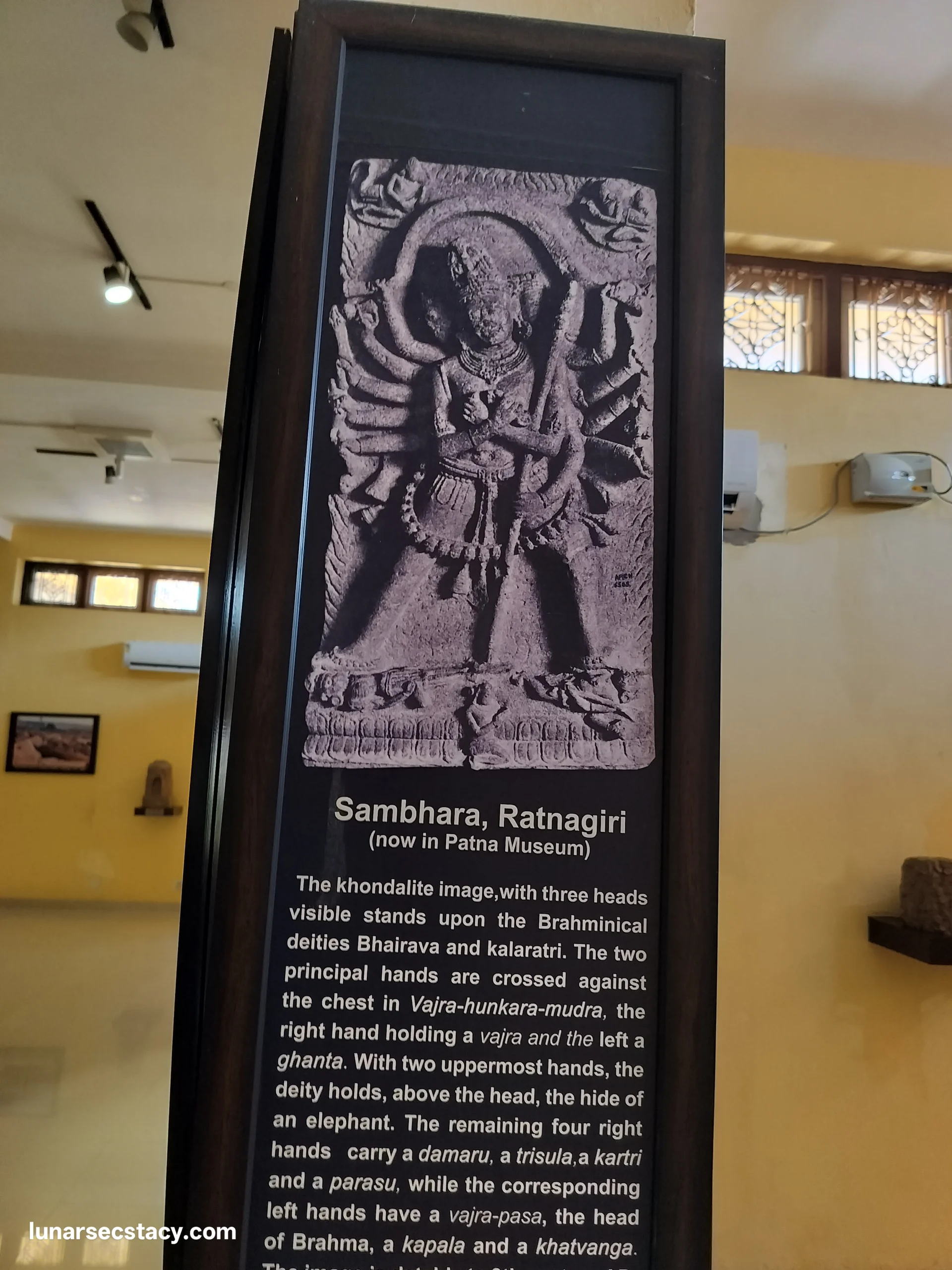
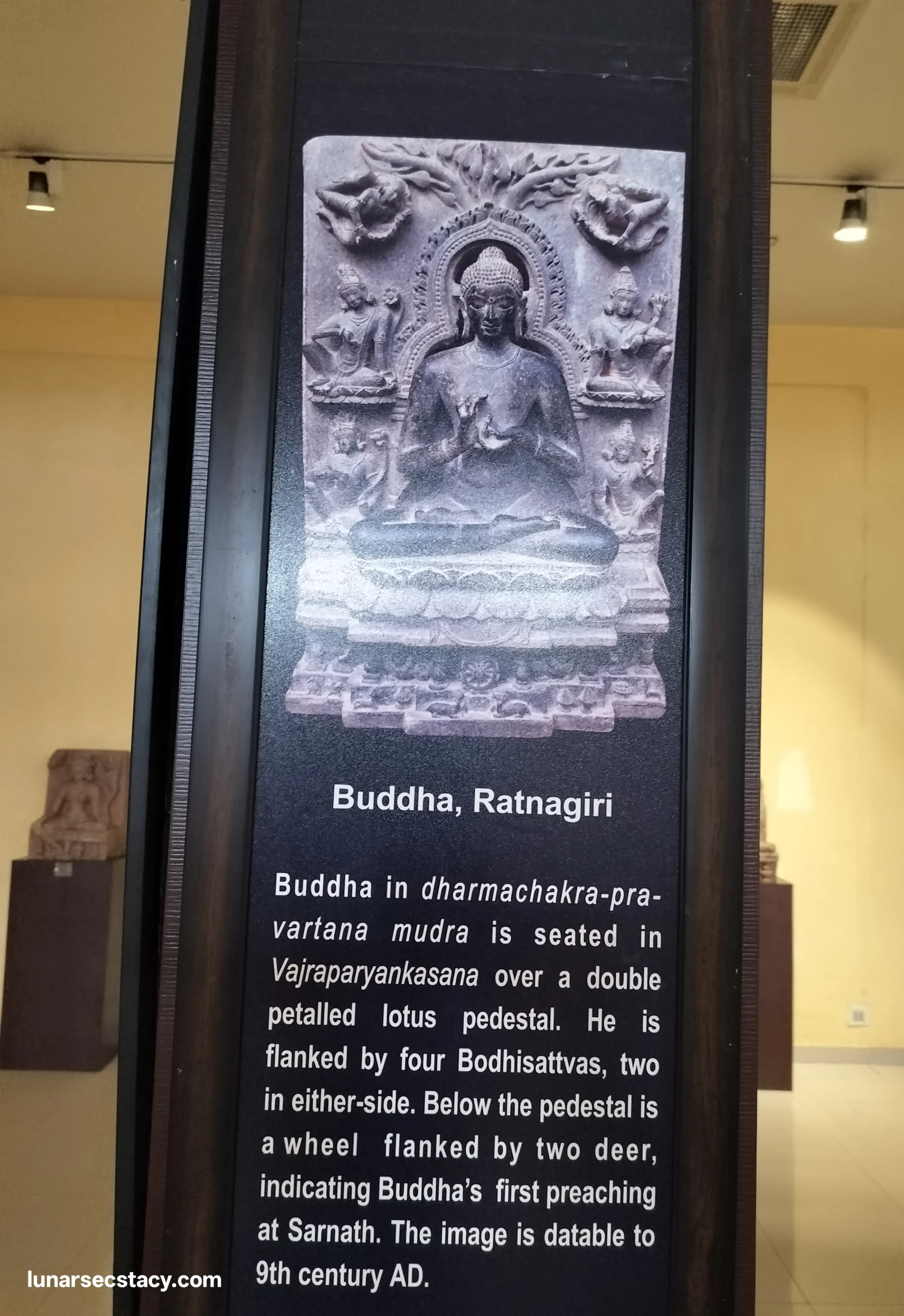
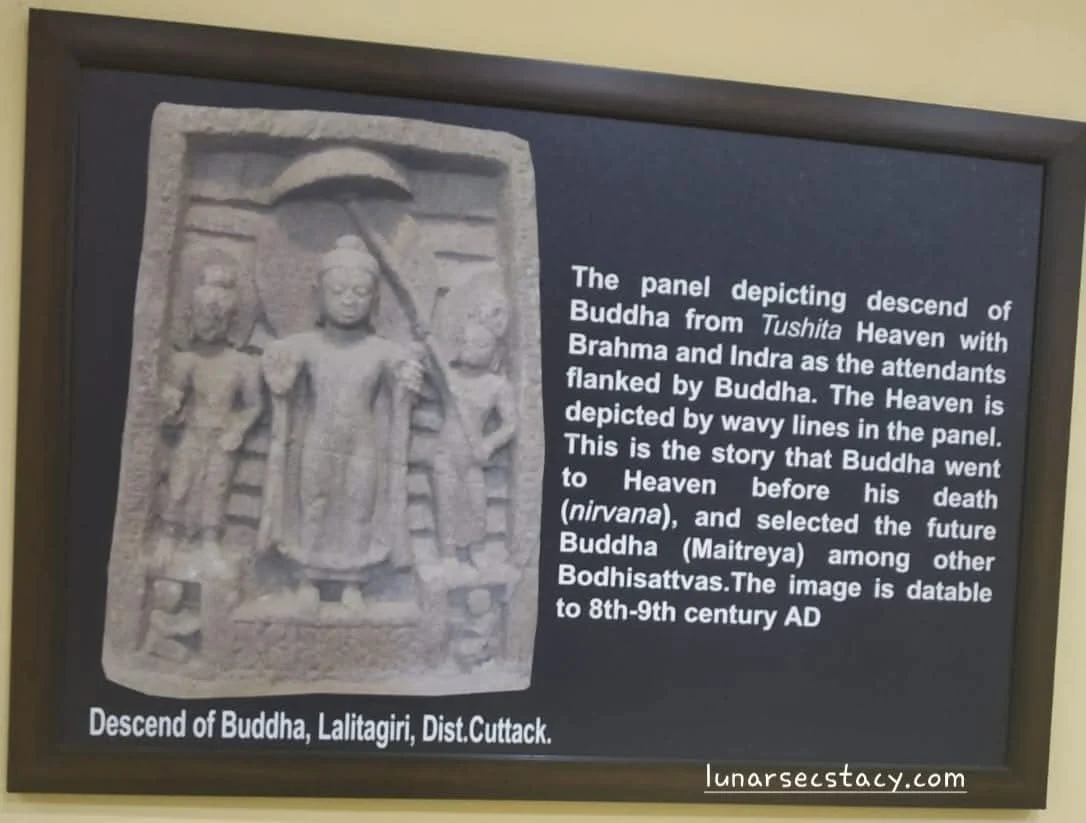
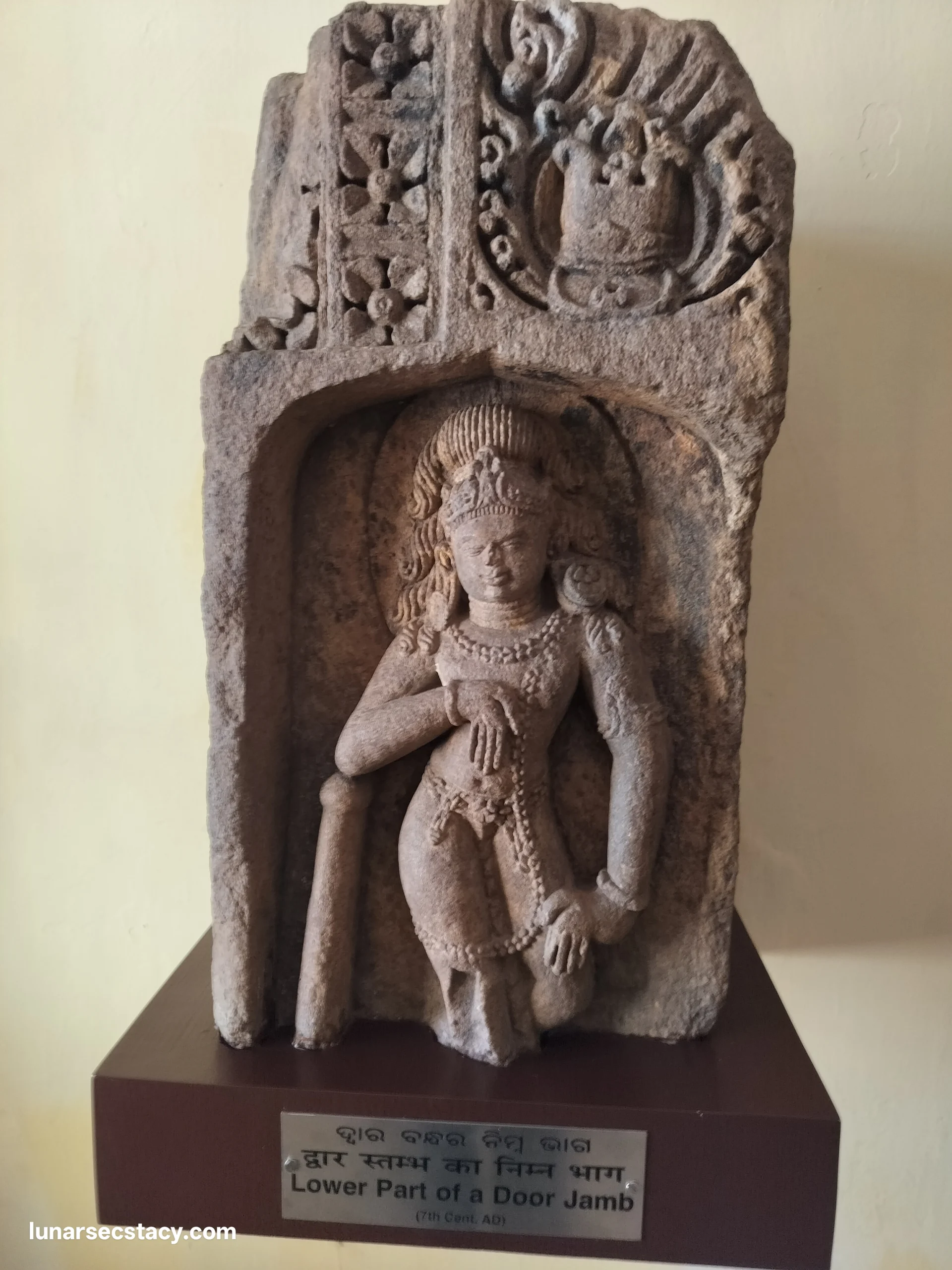
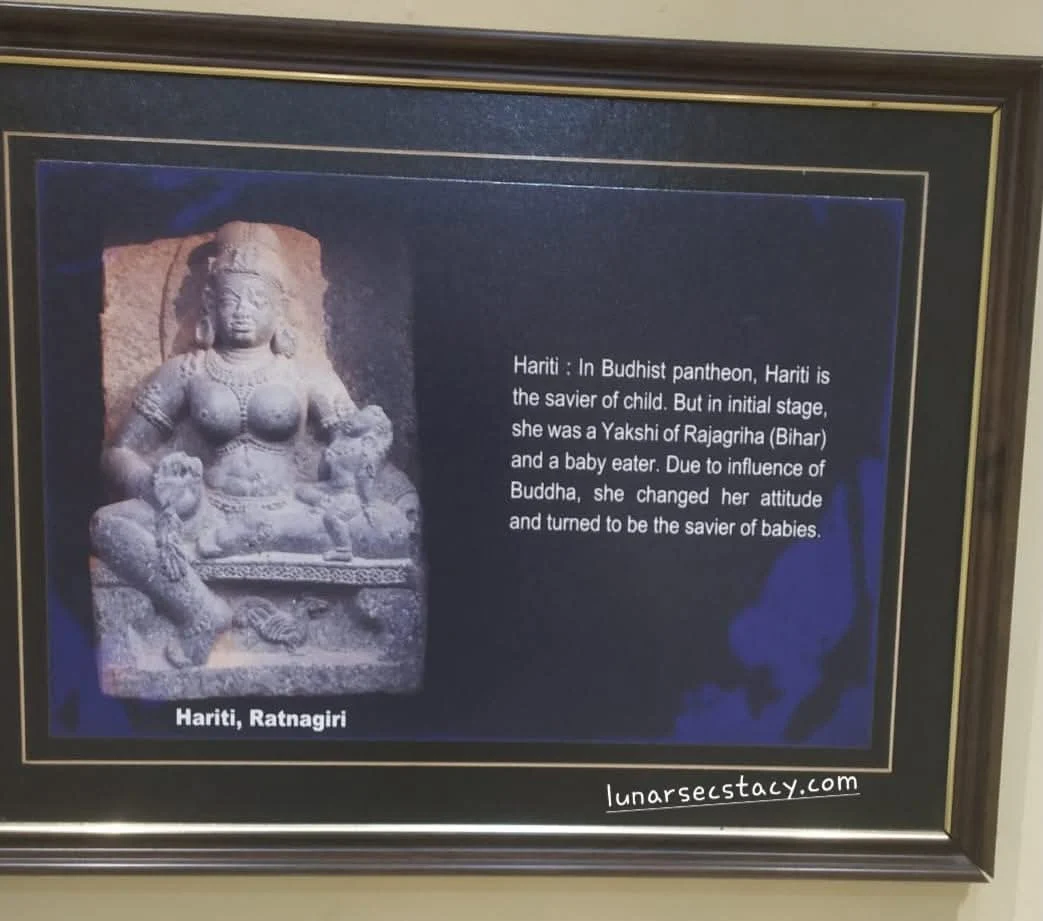
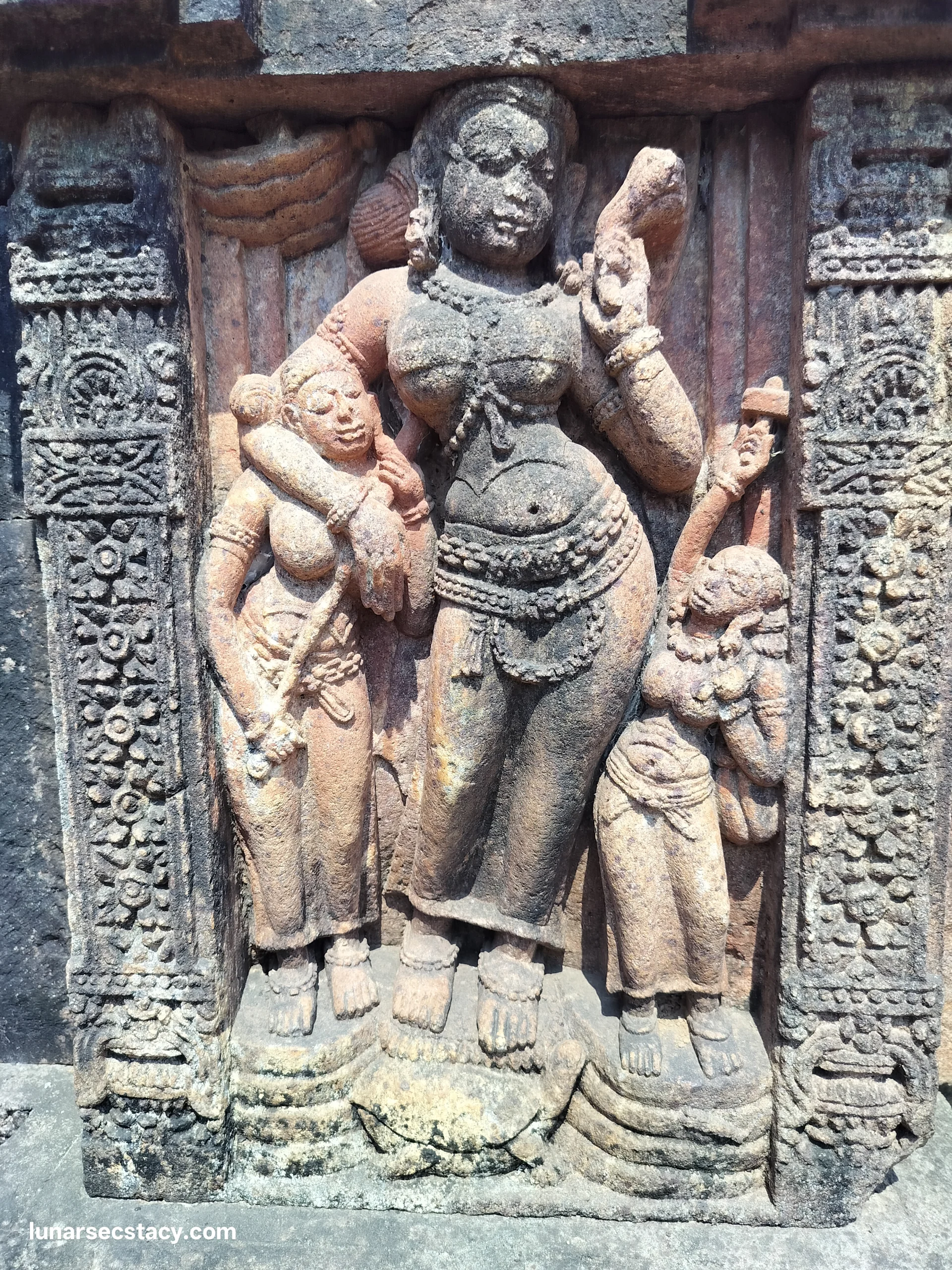
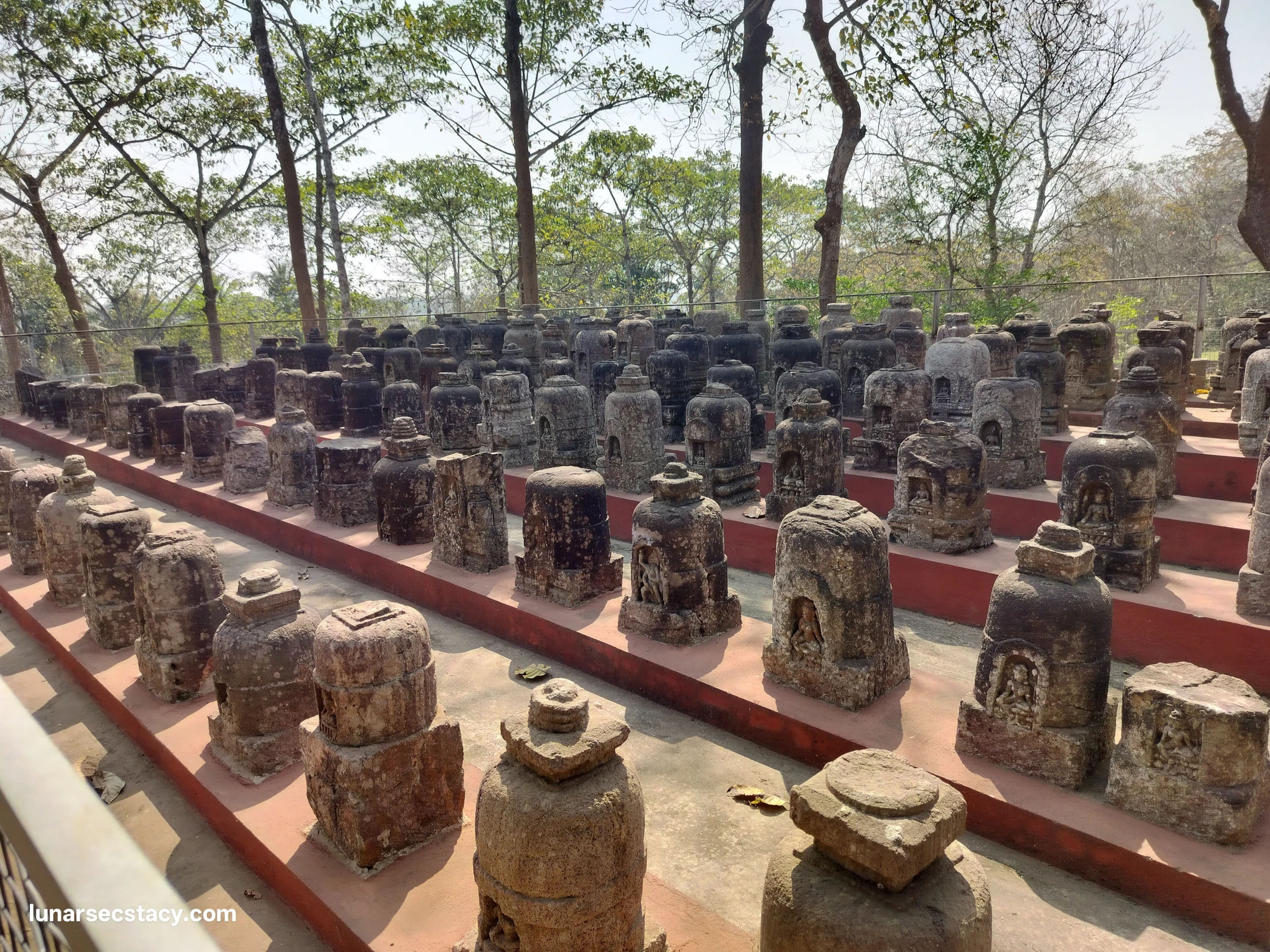
Ratnagiri differs from other Buddhist sites in one particular aspect. There are hundreds of unearthed miniature votive stupas at Ratnagiri, scattered over a wide area. These votive stupas are decorated with lotus petals and bead tassels. Some of them are inscribed with the Buddhist creed. Can it be interpreted that the followers of Buddhism were donating these little votive stupas then( just like today’s Saivites donate brass bells and snakes in Shiva temples) ??? If this was the case, there must have been huge workshops for construction of such votive stupas in the nearby areas. More horizontal excavation has to be undertaken so as to unearth more of such votive stupas and other Buddhist sculptures/ motifs of those times.
https://lunarsecstacy.com/2021/03/26/romance-with-metals-through-lost-wax-method-thousand-years-back/
Lalitagiri Museum & Exhibit Highlights
- Relic Caskets: Rare stone caskets containing sacred bone relics (believed to be of the Buddha) found within a large stupa.
- Iconography: Large, standing Buddha figures reminiscent of the Gandhara style, along with figures of Tara, Hariti, and Manjusri.
- Apsidal Chaityagriha: Excavated structural remains of a unique, large, brick-built, eastward-facing temple
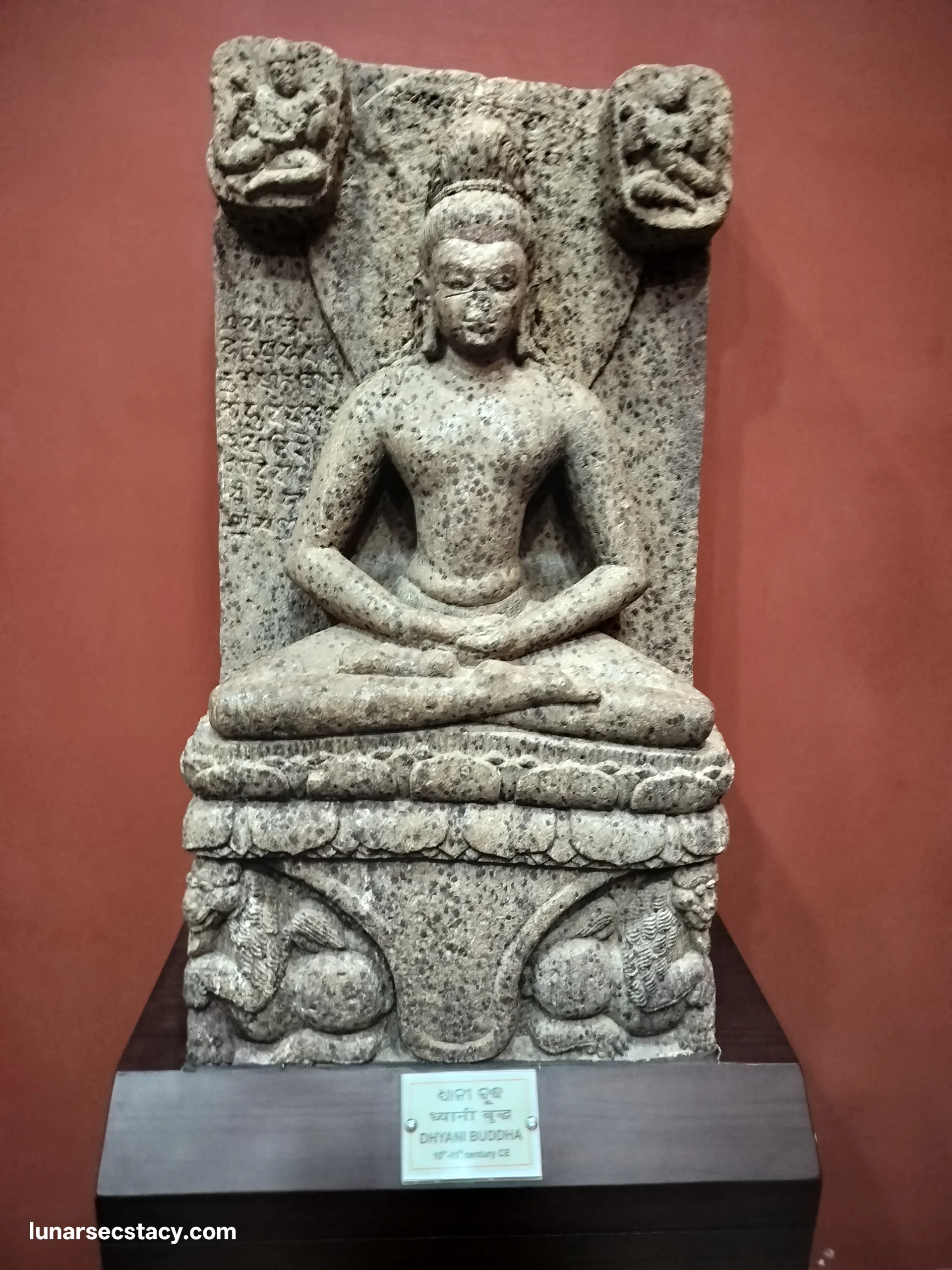
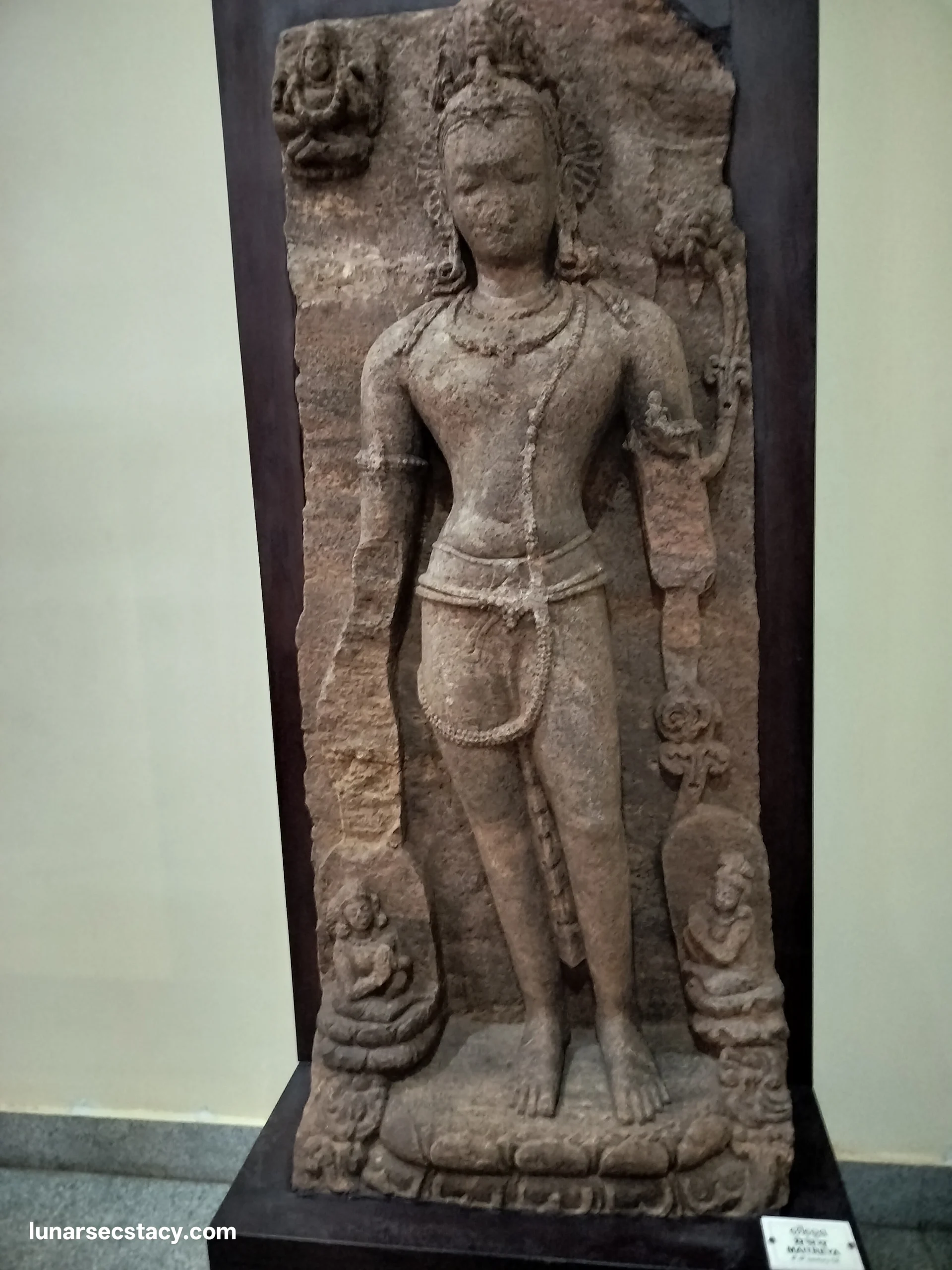
https://lunarsecstacy.com/2021/03/26/romance-with-metals-through-lost-wax-method-thousand-years-back/
Conclusion:
UNESCO has officially accepted the Serial Nomination of Odisha’s Diamond Triangle — Ratnagiri, Udayagiri, and Lalitgiri into India’s Tentative List for World Heritage status. This recognition reinforces Odisha’s significance in the global Buddhist landscape. There needs to be a vast horizontal excavation in the nearby areas of these monasteries so that a huge numbers of Buddhist antiquity will be unearthed and will contribute to make our understanding of Buddhism more clear.
Dr Manoj Mishra, lunarsecstasy@gmail.com
