The Ultimate Odia Bhagabata: Jagannath Das’s Timeless Masterpiece

The World Famous Sun Temple At Konark Vs Newton’s Rainbow
Newton’s Rainbow and Sun Temple of Konark
Our modern society knows that Newton was the first person to give the world a proper idea of the rainbow. He tried to divide the sun’s rays into a variety of colors by reflecting it through a prism … which is known as VIBGYOR (violet,indigo, blue, green, yellow, orange, red).
Our current knowledge and understanding of light and color begins with many experiments published in 1672 by Isaac Newton (1642-1726).
But it amazes us whenever we look at the Sun temples in different parts of India (such as the Sun Temple in Konark, Odisha, the Sun Temple in Modhera in Gujarat, etc.) and the idols of the Sun God in various places. It is absolutely awe-inspiring that everywhere, the chariot of the Sun God is driven by seven enthusiastic horses…Here the million dollar question is why the number of horses is seven ? Why not any other number?
The horses at the Sun Temple in Konark were believed to be of seven different colors. Some people come out with the argument that 24 wheels represent 24 hours a day and seven horses seven days a week. The equilibrium is understood in between 24wheels and 24 hours a day in view of the solar clock system (which does not even contradict the number of hours per day even in a leap year). But ‘Seven Days a Week’ Vs ‘Seven Horses’ does not appear convincing.
In this regard, we can conclude that about 1,000 years ago, those ancient people were completely aware of the presence of seven different colors in sunlight. Here I am attaching an image of the Sun God (a statue of the Sun God present as a side deity on the wall of the Barahi temple of Churashi in the Puri district of Odisha, India). The seven horses of the chariot run by Arun( Charioteer) are clearly visible under the lotus pedestal of the Sun God.
This MATSYA BARAHI temple was built in first half of 10th century AD during Somavamsi(dynasty) rulers (holding a fish in her right hand and a bowl made of human skull in her right hand) .
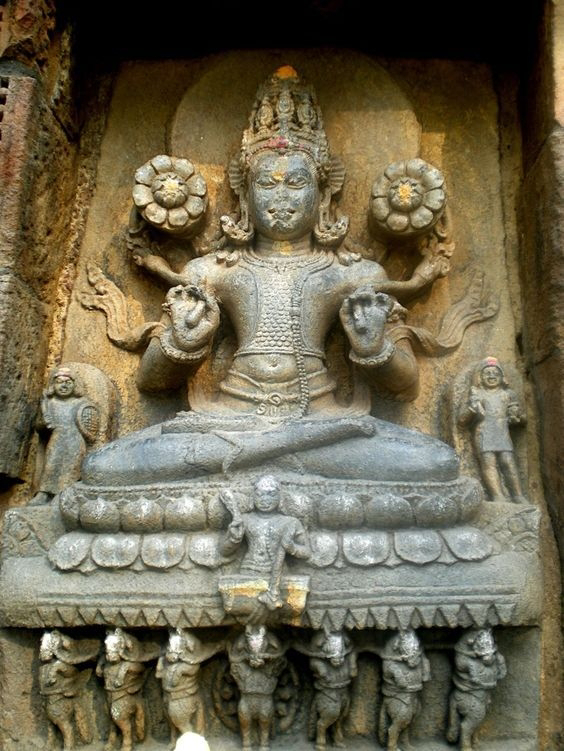
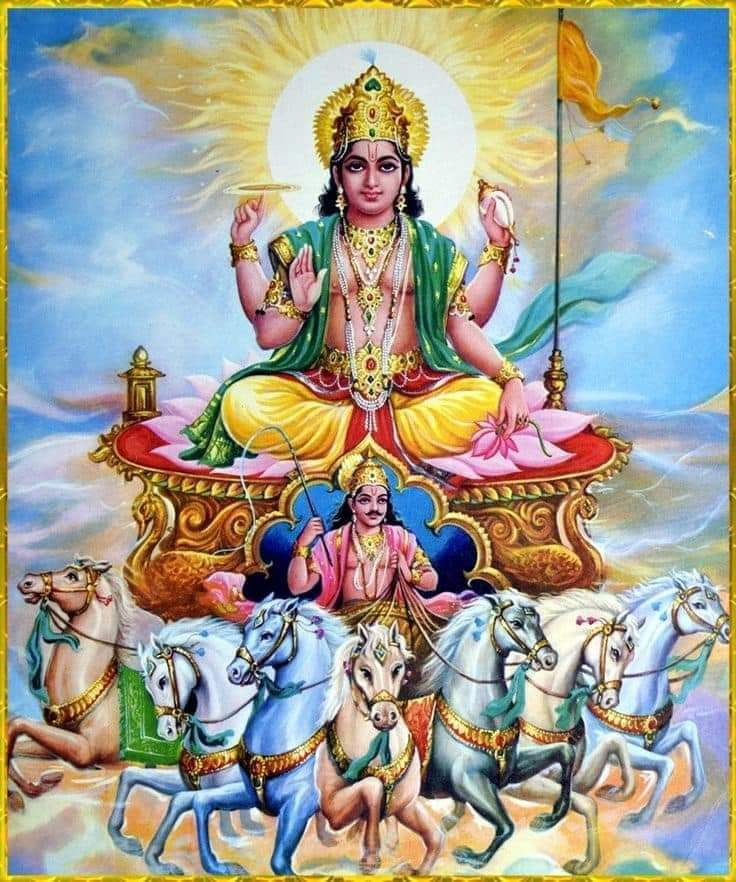
‘Seven horses engraved below the lotus pedestal of Sun God, Barahi temple, Chaurasi, 10th century AD…..,Odisha’
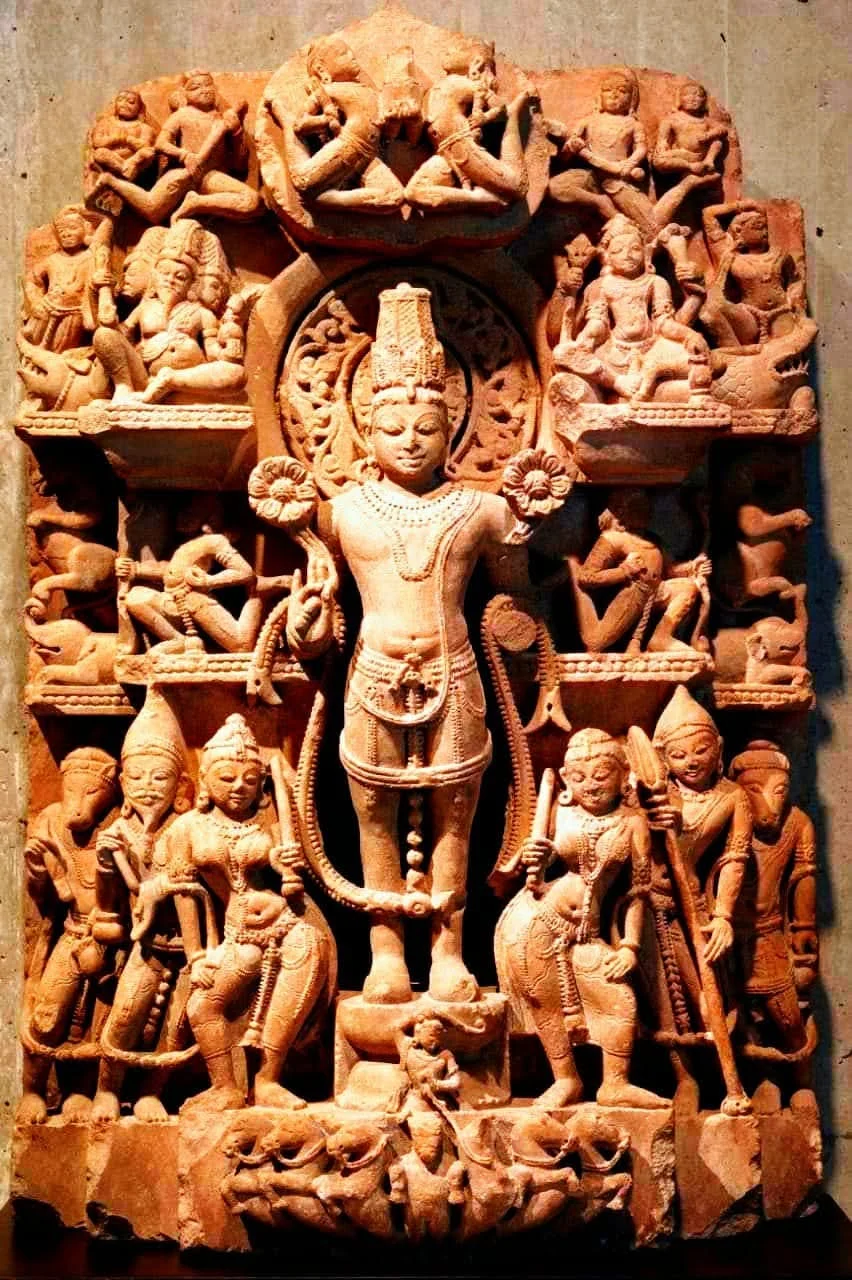
This rare piece of architecture from the time of the Mewar kings of Rajasthan is now housed in the Yale University Museum in the United States.
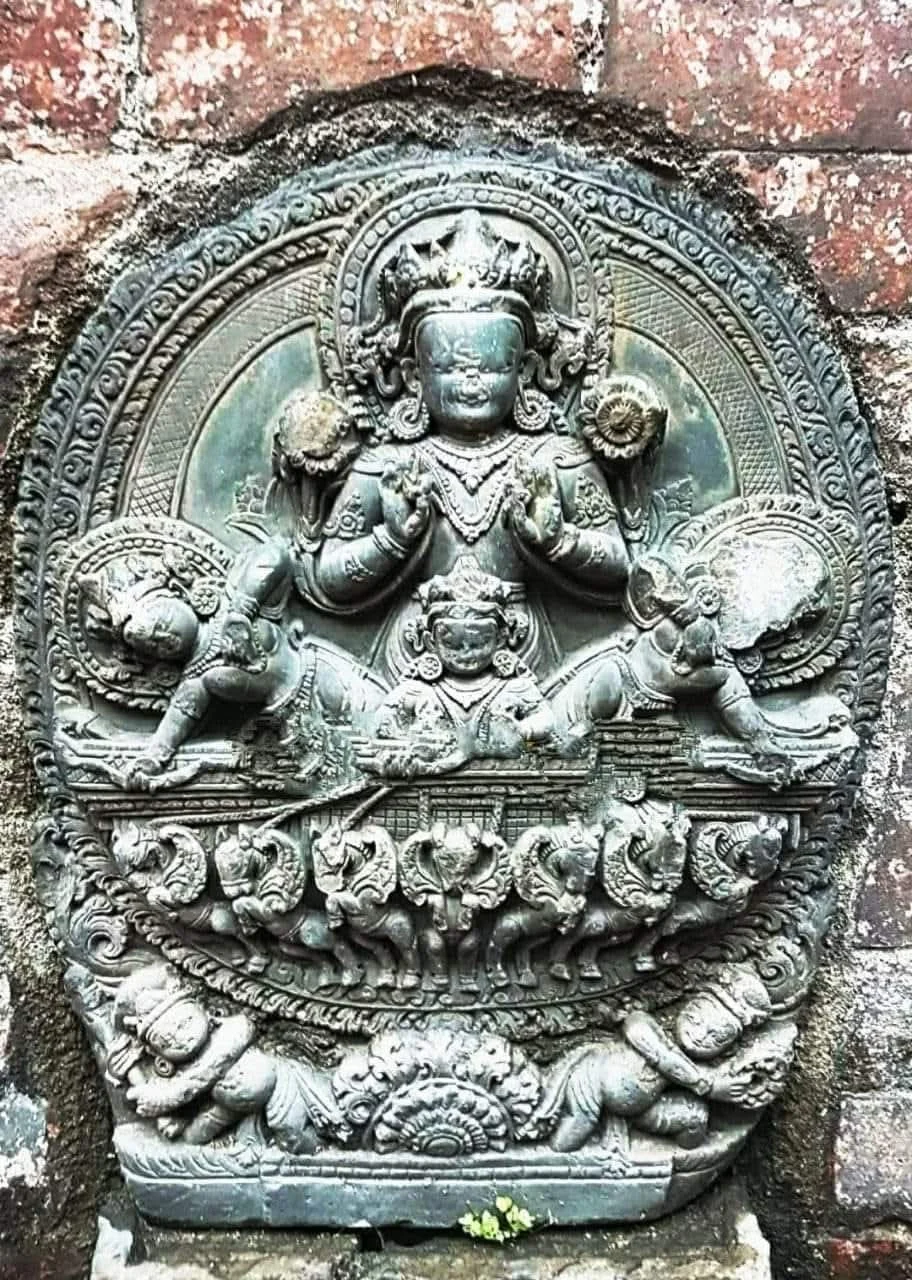
This is a Malla dynasty stone sculpture of the Hindu Sun God, Surya, riding his chariot. It is located near a traditional water spout in the Dattatraya area of Bhaktapur, Nepal.
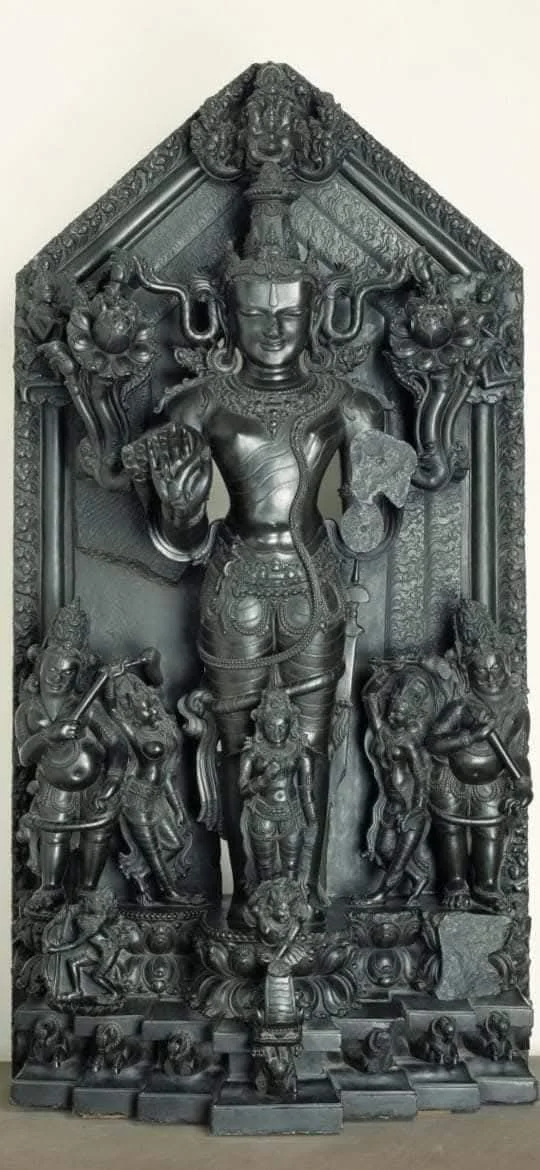
This specific sculpture of Sun God ( Surya) is currently housed in the Victoria and Albert Museum in London. The sculpture is from the Pala Empire in Eastern India (12th century AD) specifically Bihar or Bengal. Surya holds lotus tendrils, and is flanked by his consorts and attendants, including Danda and Pingala.

Seven horses engraved below the Sun God image of Sun temple at Konark,Odisha….
If you would like to get informed,everytime I post something new, then please click the follow button .
Dr. Manoj Mishra
E mail: lunarsecstasy@gmail.com
